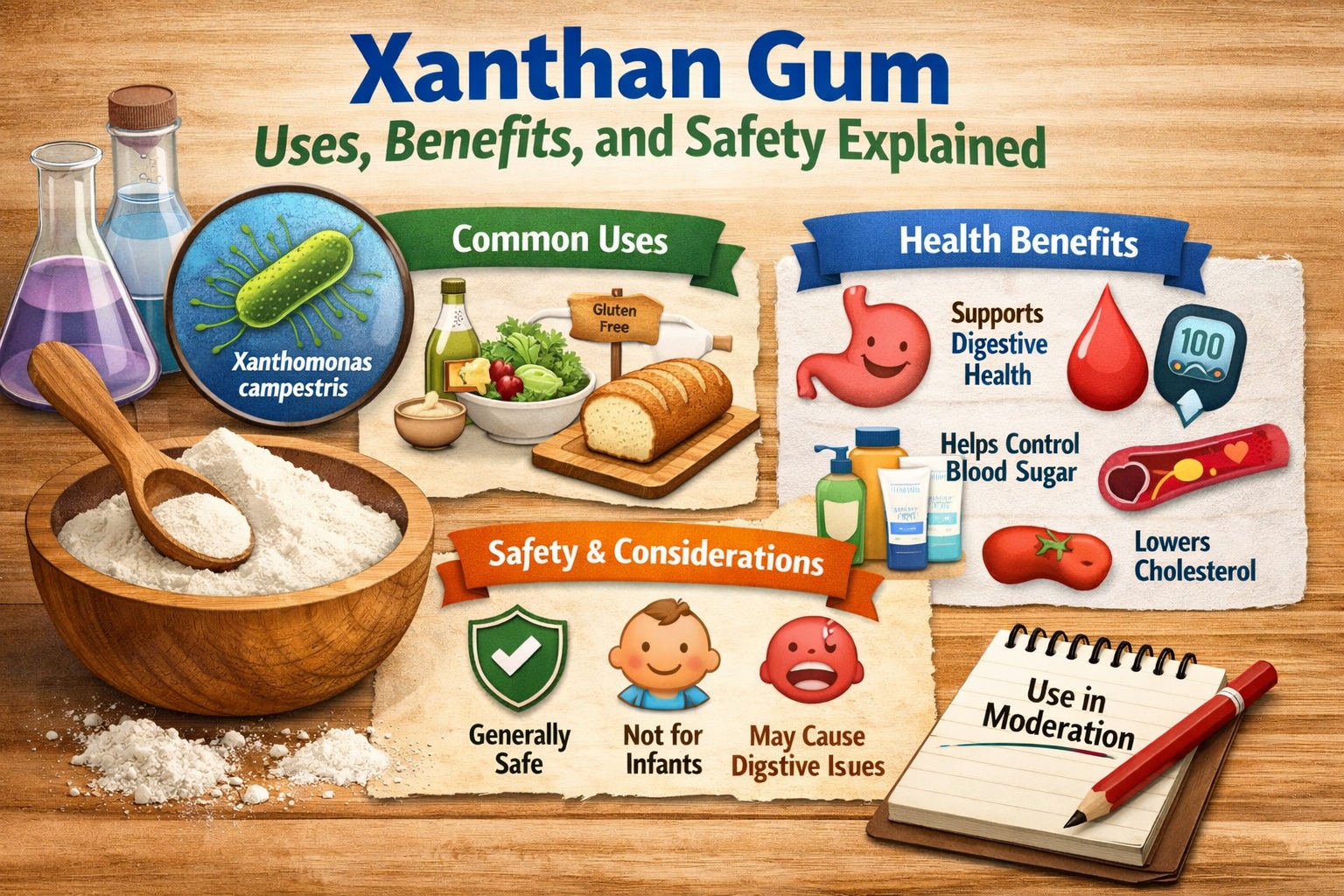
Xanthan Gum Uses, Benefits, and Safety Explained
Introduction
Xanthan gum is a common ingredient found in many everyday foods. Despite its popularity, most people know little about it. You may see it on packaged food labels or in gluten-free recipes.
Understanding xanthan gum—what it is, how it works, and whether it is safe—can help you make better food choices. This guide explains everything about xanthan gum, from its uses to its health benefits and side effects.
What Is Xanthan Gum?
Xanthan gum is a type of polysaccharide, a complex carbohydrate. It is made by fermenting sugar using the bacterium Xanthomonas campestris. This process produces a gel-like substance, which is dried and turned into a powder.
The powder dissolves easily in water. It works as a thickener and stabilizer, making it useful in food, cosmetics, and industrial products.
How Xanthan Gum Works
Xanthan gum thickens liquids and prevents ingredients from separating. Even a small amount changes texture significantly.
It is commonly used in:
- Salad dressings
- Sauces
- Dairy alternatives
This ensures products stay smooth and consistent.
Common Uses of Xanthan Gum
1. Food Industry
Xanthan gum improves:
- Texture
- Shelf life
- Overall quality
Common foods include:
- Salad dressings
- Sauces and gravies
- Ice cream
- Yogurt
- Gluten-free baked goods
It mimics gluten, making it vital for gluten-free cooking.
2. Gluten-Free Baking
Challenges in gluten-free baking:
- Baked goods can be crumbly and dry
Xanthan gum helps:
- Bind ingredients together
- Improve dough elasticity
- Create soft, chewy textures
3. Personal Care Products
Xanthan gum stabilizes:
- Toothpaste
- Lotions
- Shampoos
- Creams
It keeps ingredients from separating.
4. Pharmaceutical Applications
In medicine, xanthan gum:
- Improves liquid medication texture
- Thickens liquids for people with swallowing difficulties
Health Benefits
- Supports Digestive Health
Acts as a soluble fiber, improving digestion and bowel movements. - May Help Lower Blood Sugar
Slows digestion and may stabilize blood sugar levels. - Reduces Cholesterol
Binds to bile acids, helping reduce cholesterol. - Aids Weight Management
Expands in the stomach, promoting fullness and reducing calorie intake.
Safety of Xanthan Gum
General Safety
- Recognized as safe (GRAS)
- Safe for most people in normal amounts
Possible Side Effects
- Bloating
- Gas
- Soft stools
These occur only with excessive intake.
Special Considerations
- Infants: Avoid in premature babies
- Allergies: Rare sensitivities may occur
Xanthan Gum vs Other Thickeners
| Thickeners | Differences |
|---|---|
| Cornstarch | Needs heat; xanthan works in hot & cold liquids |
| Guar gum | Xanthan is more stable across temperature and pH; more versatile overall |
How to Use at Home
- Use small amounts: ¼ to ½ teaspoon per cup of liquid
- Sprinkle slowly to avoid clumping
- Blend thoroughly
Baking guide:
- Cookies: ¼ tsp
- Cakes: ½ tsp
- Bread: 1 tsp
Natural or Artificial?
Xanthan gum is natural, made via fermentation. It is processed, so it sits between natural and processed foods—similar to yogurt or vinegar.
Who Should Use Xanthan Gum?
- Gluten-free diet followers
- Home bakers
- People needing thickened liquids for medical reasons
- Food manufacturers for consistency
Who Should Avoid?
- Sensitive digestive systems
- People avoiding processed additives
- Individuals allergic to source ingredients
Final Thoughts
Xanthan gum is versatile and practical. It improves food texture, stabilizes sauces, and supports gluten-free cooking.
Use in moderation, as with any additive. Knowing how it works helps you make informed food choices.