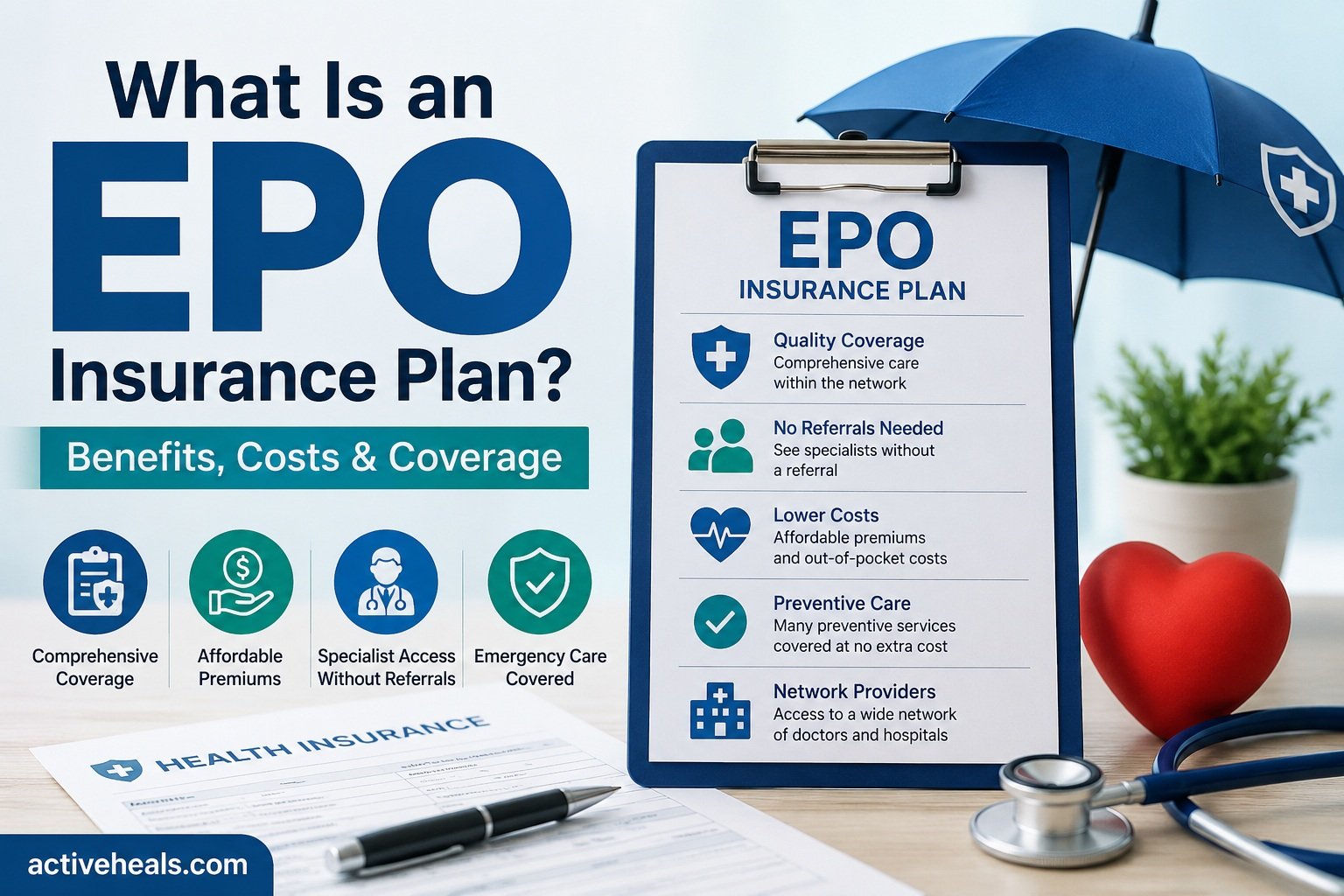
What Is an EPO Insurance Plan? Benefits, Costs & Coverage
What Is an EPO Insurance Plan?
Choosing the right health insurance plan can be confusing, especially when faced with different options such as HMO, PPO, and EPO plans. Among these choices, an EPO insurance plan is becoming increasingly popular because it offers a balance between affordability and flexibility. Understanding how an Exclusive Provider Organization (EPO) works can help you determine whether it is the right healthcare coverage for your needs.
Understanding an EPO Insurance Plan
An EPO (Exclusive Provider Organization) insurance plan is a type of health insurance that requires members to receive medical care from healthcare providers within a specific network. Unlike some other health insurance plans, EPO plans generally do not cover non-emergency services obtained outside the provider network.
The main advantage of an EPO plan is that it often combines lower costs with greater flexibility than traditional HMO plans. Members can typically visit specialists without obtaining referrals from a primary care physician, making healthcare access more convenient.
How Does an EPO Insurance Plan Work?
An EPO plan contracts with a network of doctors, hospitals, clinics, and healthcare providers. When policyholders seek care from providers within this network, the insurance company helps cover the associated costs according to the terms of the policy.
Here’s how it generally works:
- You select healthcare providers within the plan’s network.
- You do not usually need a referral to see a specialist.
- Preventive care is often covered at little or no additional cost.
- Emergency medical services are covered even if received outside the network.
- Non-emergency care obtained outside the network is typically not covered.
Because insurers negotiate rates with network providers, healthcare services are often more affordable for members.
Key Features of EPO Insurance Plans
Network-Based Coverage
EPO plans operate through a defined network of healthcare providers. Staying within the network is essential for receiving covered medical services.
No Specialist Referrals Required
One of the biggest advantages of EPO plans is the ability to see specialists directly without obtaining a referral from a primary care doctor.
Lower Premiums
Compared to many PPO plans, EPO plans often have lower monthly premiums because the insurer limits coverage to a designated provider network.
Emergency Coverage
Emergency medical treatment is generally covered regardless of whether the healthcare provider is within the network.
Cost Control
By encouraging members to use a specific network, insurers can better control healthcare costs, which can result in lower premiums and out-of-pocket expenses.
EPO vs. HMO: What’s the Difference?
Many people confuse EPO and HMO plans because both rely on provider networks. However, there are important differences.
EPO Plans
- No referrals usually required.
- Must use network providers for most services.
- Lower premiums than many PPO plans.
- Greater flexibility than HMOs.
HMO Plans
- Usually require a primary care physician.
- Referrals are often needed for specialists.
- Strict network requirements.
- Often offer lower premiums than EPO plans.
For individuals who want specialist access without referral requirements, an EPO plan may be more attractive.
EPO vs. PPO: What’s the Difference?
PPO and EPO plans share some similarities, but they differ significantly regarding out-of-network coverage.
EPO Plans
- No coverage for most non-emergency out-of-network care.
- Lower monthly premiums.
- Lower overall healthcare costs.
PPO Plans
- Coverage available for out-of-network services.
- Greater provider flexibility.
- Higher monthly premiums.
- Potentially higher out-of-pocket expenses.
People who frequently travel or prefer maximum provider flexibility often choose PPO plans despite the higher costs.
Advantages of an EPO Insurance Plan
Affordable Premiums
EPO plans generally offer lower premiums compared to PPO plans, making them attractive for budget-conscious individuals and families.
Easy Access to Specialists
Since referrals are typically unnecessary, members can schedule appointments with specialists directly.
Lower Healthcare Costs
Network agreements help reduce medical costs and can result in lower deductibles and copayments.
Simplified Care Management
Without the need for referral approvals, patients often experience faster access to medical care.
Strong Provider Networks
Many EPO plans partner with reputable hospitals, physicians, and healthcare systems, providing quality care options within the network.
Disadvantages of an EPO Insurance Plan
Limited Provider Choice
Members must generally stay within the network to receive coverage for medical services.
No Out-of-Network Coverage
Except for emergencies, services received outside the network are usually not covered.
Geographic Limitations
Individuals who travel frequently or live in multiple locations may find network restrictions inconvenient.
Potential Provider Availability Issues
Depending on your location, the network may offer fewer healthcare providers compared to PPO plans.
Who Should Consider an EPO Plan?
An EPO insurance plan may be ideal for:
- Individuals seeking affordable health insurance.
- People who prefer direct access to specialists.
- Families looking to reduce healthcare expenses.
- Individuals who primarily receive care within a specific geographic area.
- Employees offered EPO coverage through workplace benefits.
However, people who regularly travel or require access to out-of-network providers may benefit more from a PPO plan.
What Does an EPO Insurance Plan Cover?
Coverage varies by insurer, but EPO plans commonly include:
Preventive Care
- Annual physical exams
- Vaccinations
- Wellness screenings
- Preventive health services
Medical Services
- Doctor visits
- Specialist consultations
- Diagnostic testing
- Laboratory services
Hospital Care
- Inpatient treatment
- Outpatient procedures
- Emergency room visits
- Surgical services
Prescription Drugs
Most EPO plans include prescription medication coverage through a formulary system.
Mental Health Services
Many plans provide coverage for counseling, therapy, and behavioral health treatment.
How Much Does an EPO Insurance Plan Cost?
The cost of an EPO insurance plan depends on several factors, including:
- Age
- Location
- Coverage level
- Insurance provider
- Family size
Typical expenses may include:
- Monthly premium
- Annual deductible
- Copayments
- Coinsurance
- Out-of-pocket maximum
Although premiums are often lower than PPO plans, it is important to review the network carefully before enrolling.
Tips for Choosing an EPO Insurance Plan
Check the Provider Network
Verify that your preferred doctors, specialists, and hospitals participate in the network.
Review Prescription Coverage
Ensure your medications are included in the plan’s drug formulary.
Compare Costs
Evaluate premiums, deductibles, copayments, and out-of-pocket maximums.
Consider Future Healthcare Needs
Think about upcoming medical procedures, specialist visits, or ongoing treatments before selecting a plan.
Understand Emergency Coverage
Review how emergency and urgent care services are covered both inside and outside your area.
Frequently Asked Questions
Is an EPO insurance plan better than a PPO?
Neither plan is universally better. EPO plans offer lower costs, while PPO plans provide greater flexibility and out-of-network coverage.
Do I need a referral to see a specialist with an EPO plan?
In most cases, no. EPO plans generally allow direct access to specialists without referrals.
Are emergencies covered outside the EPO network?
Yes. Emergency medical services are typically covered regardless of network status.
Can I use out-of-network doctors with an EPO plan?
Generally, no. Non-emergency care received outside the network is usually not covered.
Is an EPO plan good for families?
Yes. Many families choose EPO plans because they provide comprehensive coverage while helping control healthcare costs.
Conclusion
An EPO insurance plan offers a practical middle ground between HMO and PPO health insurance options. It provides affordable premiums, direct access to specialists, and comprehensive healthcare coverage through a designated provider network. While the lack of out-of-network coverage may be a drawback for some individuals, many people find that the cost savings and convenience make an EPO plan an excellent choice. Before enrolling, carefully review the provider network, coverage details, and anticipated healthcare needs to ensure the plan aligns with your lifestyle and budget.