Nutritional Yeast Benefits, Uses, and Complete Guide
What Is Nutritional Yeast?
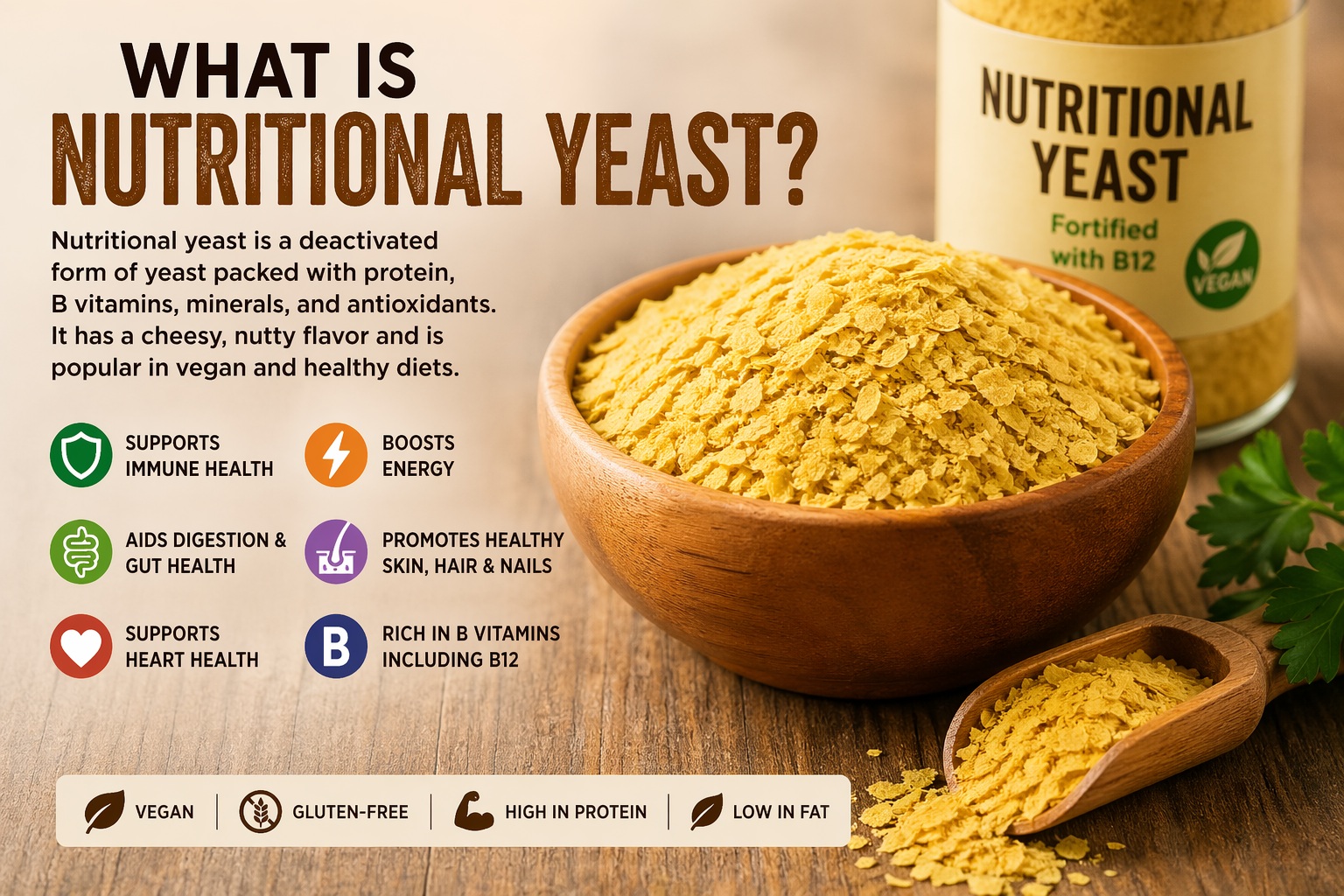
Nutritional yeast is a deactivated form of yeast made from the microorganism Saccharomyces cerevisiae. Unlike baking yeast or brewer’s yeast, it is not alive and does not cause fermentation. Instead, it is cultivated, harvested, heated to deactivate it, and then dried into flakes, granules, or powder.
It has gained popularity in recent years, especially among vegans and health-conscious individuals, due to its rich nutrient profile and unique cheesy, nutty flavor. Nutritional yeast is commonly used as a seasoning or ingredient rather than a leavening agent.
How Is Nutritional Yeast Made?
The production of nutritional yeast begins by growing yeast cells on a sugar-rich medium, often derived from molasses or sugarcane. Once the yeast has grown sufficiently, it is harvested, washed, and heated to deactivate it. This process ensures that the yeast cannot grow or reproduce.
After deactivation, it is dried and processed into its final form. Some varieties are fortified with additional vitamins, especially B vitamins, making them even more nutritionally valuable.
Nutritional Profile of Nutritional Yeast
Nutritional yeast is considered a powerhouse of essential nutrients. It is particularly known for its high protein and vitamin content.
Key Nutrients Found in Nutritional Yeast
- Protein: Contains all nine essential amino acids, making it a complete protein source
- B Vitamins: Often fortified with vitamin B12, along with B1, B2, B3, and B6
- Fiber: Supports digestion and gut health
- Minerals: Includes zinc, selenium, and iron
- Low in Fat and Sugar: Suitable for weight-conscious diets
Just a small serving (about 2 tablespoons) can provide a significant portion of your daily nutrient needs, especially for vegans who may lack vitamin B12 in their diet.
Health Benefits of Nutritional Yeast
Supports Immune Function
Nutritional yeast contains beta-glucans, compounds known to help support the immune system. These may help the body defend against infections and improve overall resilience.
Boosts Energy Levels
The high concentration of B vitamins plays a crucial role in converting food into energy. This can help reduce fatigue and support daily energy needs.
Promotes Healthy Skin, Hair, and Nails
B vitamins, along with protein and antioxidants, contribute to healthier skin, stronger nails, and improved hair quality.
Aids Digestive Health
The fiber content in nutritional yeast supports gut health and promotes regular digestion. It may also contribute to a balanced gut microbiome.
Supports Heart Health
Some studies suggest that nutritional yeast may help lower cholesterol levels due to its beta-glucan content, which can contribute to improved cardiovascular health.
Nutritional Yeast vs. Other Types of Yeast
Understanding the difference between nutritional yeast and other types of yeast is important.
Nutritional Yeast vs. Baking Yeast
- Nutritional yeast is deactivated and used as food
- Baking yeast is active and used to make bread rise
Nutritional Yeast vs. Brewer’s Yeast
- Nutritional yeast has a milder, more pleasant flavor
- Brewer’s yeast is often bitter and used as a byproduct of beer production
Is Nutritional Yeast Vegan-Friendly?
Yes, nutritional yeast is completely vegan and plant-based. It is especially popular in vegan diets because it can mimic the taste of cheese and provide nutrients like vitamin B12, which are typically found in animal products.
This makes it an excellent choice for individuals following vegetarian or vegan lifestyles.
Common Uses of Nutritional Yeast
Nutritional yeast is incredibly versatile and can be used in many dishes.
As a Cheese Substitute
Its savory, umami flavor makes it a great alternative to cheese. It can be sprinkled over:
- Popcorn
- Pasta
- Salads
- Roasted vegetables
In Sauces and Dressings
Nutritional yeast can be blended into sauces to create creamy, dairy-free alternatives. It works well in:
- Vegan cheese sauces
- Salad dressings
- Soups
In Cooking and Baking
It can be added to recipes to enhance flavor without adding extra fat or calories. It pairs well with mashed potatoes, casseroles, and even scrambled tofu.
How to Use Nutritional Yeast in Your Diet
Adding nutritional yeast to your diet is simple and convenient.
- Start with 1–2 tablespoons per day
- Sprinkle it on your favorite dishes
- Mix it into smoothies or sauces
- Use it as a seasoning for snacks
Its mild flavor blends well with many foods, making it easy to incorporate into everyday meals.
Are There Any Side Effects?
Nutritional yeast is generally safe for most people, but there are a few considerations.
Possible Concerns
- Allergies: Rare, but possible in sensitive individuals
- Digestive Issues: Large amounts may cause bloating in some people
- Tyramine Content: May trigger headaches in individuals sensitive to tyramine
Moderation is key, and it is always advisable to consult a healthcare professional if you have specific health conditions.
How to Choose the Best Nutritional Yeast
When buying nutritional yeast, consider the following:
- Fortified vs. Unfortified: Fortified versions contain added vitamin B12
- Organic Options: Free from pesticides and additives
- Form: Available in flakes, granules, or powder
Flakes are the most popular form due to their texture and ease of use.
Storage Tips
To maintain freshness and nutritional value:
- Store in a cool, dry place
- Keep it in an airtight container
- Refrigeration can extend shelf life
Proper storage ensures that the flavor and nutrients remain intact.
FAQs About Nutritional Yeast
What does nutritional yeast taste like?
Nutritional yeast has a cheesy, nutty, and slightly savory flavor, often described as umami-rich.
Is nutritional yeast the same as yeast used in baking?
No, nutritional yeast is deactivated and cannot be used for baking or fermentation.
Can nutritional yeast help with vitamin B12 deficiency?
Fortified nutritional yeast can be a good source of vitamin B12, especially for vegans. However, it should not replace medical advice or supplements if needed.
How much nutritional yeast should I consume daily?
Typically, 1–2 tablespoons per day is sufficient to gain its nutritional benefits.
Is nutritional yeast gluten-free?
Most nutritional yeast products are naturally gluten-free, but it is always best to check the label for certification.
Conclusion
Nutritional yeast is a highly nutritious, versatile, and flavorful addition to a healthy diet. Packed with protein, vitamins, and minerals, it offers numerous health benefits ranging from improved energy levels to better immune function.
Whether you are vegan, health-conscious, or simply looking to enhance the flavor of your meals, nutritional yeast is a simple yet powerful ingredient worth adding to your kitchen.