Type 1 vs Type 2 Diabetes: Key Differences Explained
Introduction
Diabetes is one of the most common chronic health conditions affecting millions of people worldwide. It develops when the body cannot properly regulate blood sugar levels, leading to serious health complications if left untreated. Although many people are familiar with the term diabetes, fewer understand the important differences between type 1 and type 2 diabetes.
Both conditions involve problems with insulin, the hormone responsible for moving sugar from the bloodstream into cells for energy. However, the causes, risk factors, treatment approaches, and long-term management strategies differ significantly between the two types.
Understanding these differences is essential for early diagnosis, effective treatment, and better overall health outcomes. This guide explains everything you need to know about type 1 and type 2 diabetes in a simple and informative way.
What Is Diabetes?
Diabetes is a medical condition that affects how the body processes glucose, commonly known as blood sugar. Glucose is the body’s primary source of energy and comes from the foods we eat.
The hormone insulin, produced by the pancreas, helps glucose enter cells where it is used for energy. When the body either does not produce enough insulin or cannot use insulin properly, blood sugar levels rise.
There are two main types of diabetes:
- Type 1 diabetes
- Type 2 diabetes
While both conditions lead to elevated blood sugar levels, they develop differently and require different treatment approaches.
What Is Type 1 Diabetes?
Type 1 diabetes is an autoimmune disease in which the immune system mistakenly attacks and destroys insulin-producing cells in the pancreas. As a result, the body produces little or no insulin.
People with type 1 diabetes must take insulin daily to survive.
Causes of Type 1 Diabetes
The exact cause of type 1 diabetes is still unknown, but experts believe several factors contribute to its development, including:
- Genetic predisposition
- Autoimmune reactions
- Environmental triggers such as viral infections
Unlike type 2 diabetes, type 1 is not caused by lifestyle or diet choices.
Common Symptoms of Type 1 Diabetes
Symptoms of type 1 diabetes often appear suddenly and may include:
- Excessive thirst
- Frequent urination
- Extreme hunger
- Sudden weight loss
- Fatigue
- Blurred vision
- Irritability
Type 1 diabetes is commonly diagnosed in children and young adults, although it can develop at any age.
What Is Type 2 Diabetes?
Type 2 diabetes occurs when the body becomes resistant to insulin or when the pancreas cannot produce enough insulin to maintain normal blood sugar levels.
It is the most common form of diabetes and accounts for the majority of diabetes cases worldwide.
Causes of Type 2 Diabetes
Several lifestyle and genetic factors increase the risk of developing type 2 diabetes, including:
- Obesity
- Physical inactivity
- Poor diet
- Family history
- High blood pressure
- Age
- Hormonal imbalances
Unlike type 1 diabetes, type 2 diabetes is often linked to lifestyle habits and can sometimes be prevented or delayed.
Common Symptoms of Type 2 Diabetes
Symptoms of type 2 diabetes usually develop gradually and may go unnoticed for years. Common symptoms include:
- Increased thirst
- Frequent urination
- Slow-healing wounds
- Fatigue
- Blurred vision
- Numbness in hands or feet
- Frequent infections
Some individuals may not experience noticeable symptoms until complications arise.
Major Differences Between Type 1 and Type 2 Diabetes
Understanding the distinction between these two conditions is essential for proper treatment and management.
Insulin Production
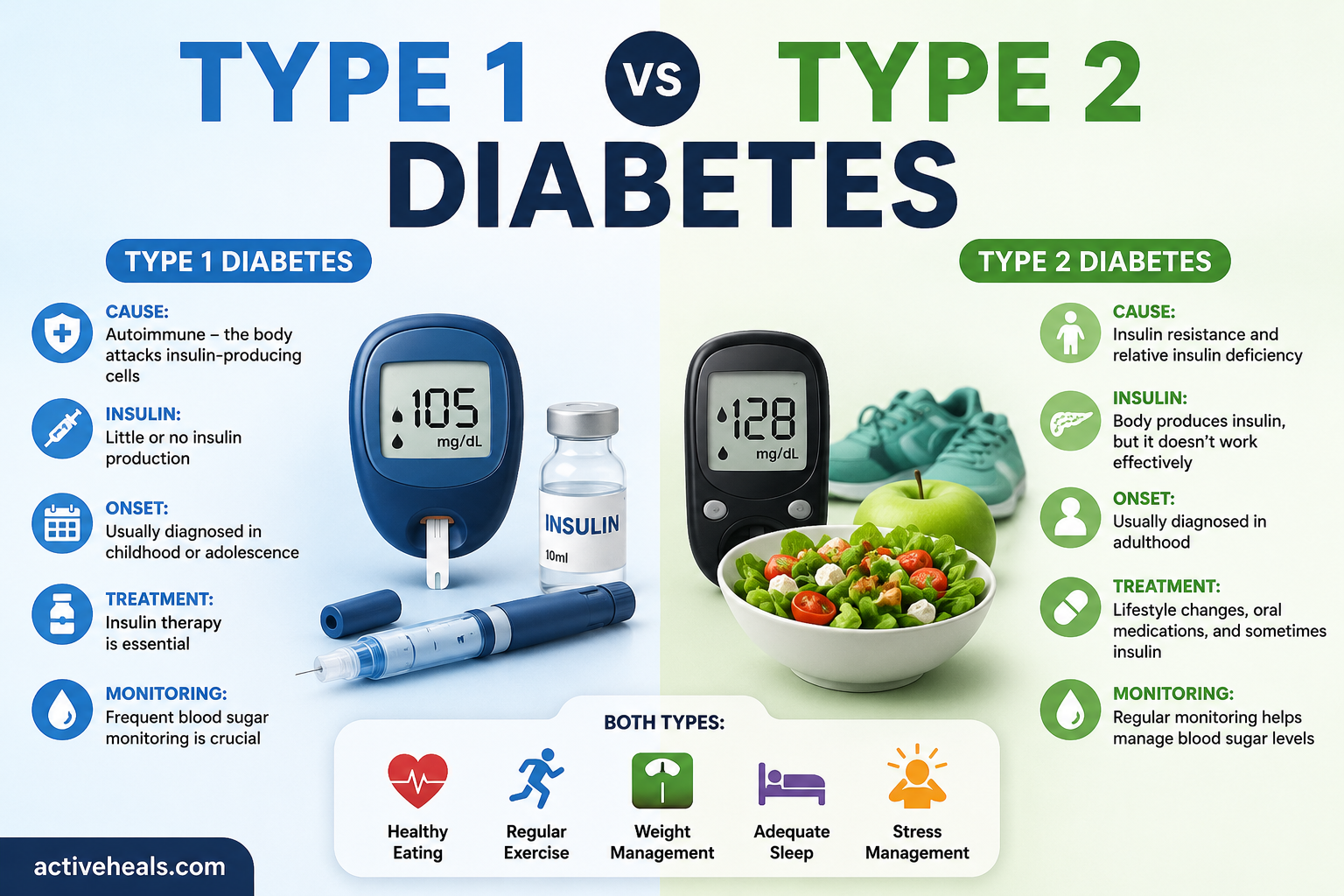
In type 1 diabetes, the body produces little or no insulin because the immune system destroys insulin-producing cells.
In type 2 diabetes, the body still produces insulin, but cells become resistant to it.
Age of Onset
Type 1 diabetes is often diagnosed during childhood or adolescence.
Type 2 diabetes is more common in adults, although increasing numbers of children and teenagers are being diagnosed due to rising obesity rates.
Causes
Type 1 diabetes is primarily caused by autoimmune factors and genetics.
Type 2 diabetes is strongly associated with lifestyle factors such as unhealthy eating habits, obesity, and lack of physical activity.
Treatment
People with type 1 diabetes require lifelong insulin therapy.
Type 2 diabetes can often be managed with lifestyle changes, oral medications, and sometimes insulin.
Prevention
Currently, there is no known way to prevent type 1 diabetes.
Type 2 diabetes can often be prevented or delayed through healthy lifestyle choices.
Diagnosis of Diabetes
Doctors use several tests to diagnose diabetes, including:
Fasting Blood Sugar Test
This test measures blood sugar levels after fasting for at least eight hours.
A1C Test
The A1C test measures average blood sugar levels over the previous two to three months.
Oral Glucose Tolerance Test
This test evaluates how the body processes sugar after consuming a glucose-rich drink.
Early diagnosis is important because untreated diabetes can lead to serious complications.
Complications of Diabetes
Both type 1 and type 2 diabetes can cause long-term health problems if blood sugar levels remain uncontrolled.
Heart Disease
People with diabetes are at a higher risk of heart attacks, strokes, and high blood pressure.
Kidney Damage
High blood sugar can damage the kidneys over time, leading to kidney disease.
Nerve Damage
Diabetes can damage nerves, especially in the legs and feet, causing pain, numbness, or tingling.
Vision Problems
Uncontrolled diabetes may lead to diabetic retinopathy and vision loss.
Foot Complications
Poor circulation and nerve damage increase the risk of foot ulcers and infections.
Managing Type 1 and Type 2 Diabetes
Although diabetes is a lifelong condition, proper management can help individuals live healthy and active lives.
Healthy Eating
A balanced diet rich in vegetables, whole grains, lean proteins, and healthy fats can help control blood sugar levels.
Regular Exercise
Physical activity improves insulin sensitivity and supports overall health.
Monitoring Blood Sugar
Frequent blood sugar monitoring helps individuals understand how food, exercise, and medications affect glucose levels.
Medication and Insulin
People with type 1 diabetes need insulin therapy daily.
Those with type 2 diabetes may require medications, insulin, or both depending on the severity of the condition.
Stress Management
Stress can affect blood sugar levels, making relaxation techniques and proper sleep important for diabetes management.
Can Type 2 Diabetes Be Reversed?
In some cases, type 2 diabetes can go into remission through significant lifestyle changes such as:
- Weight loss
- Healthy eating
- Increased physical activity
- Better sleep habits
However, remission does not mean the disease is permanently cured. Continuous healthy habits are necessary to maintain normal blood sugar levels.
Type 1 diabetes cannot currently be reversed because the body no longer produces insulin naturally.
Importance of Early Detection
Early diagnosis and treatment can prevent serious complications and improve quality of life. People with a family history of diabetes or risk factors such as obesity should schedule regular medical checkups and blood sugar testing.
Recognizing symptoms early can make a significant difference in long-term health outcomes.
FAQs
Is type 1 diabetes more serious than type 2?
Both types can become serious if not managed properly. However, type 1 diabetes requires lifelong insulin treatment from diagnosis.
Can children develop type 2 diabetes?
Yes, rising obesity rates have increased the number of children and teenagers diagnosed with type 2 diabetes.
Is insulin required for type 2 diabetes?
Not always. Many people manage type 2 diabetes through diet, exercise, and oral medications, although some may eventually need insulin.
Can diabetes be cured permanently?
Currently, there is no permanent cure for either type 1 or type 2 diabetes. However, type 2 diabetes may go into remission with lifestyle changes.
What foods should diabetics avoid?
People with diabetes should limit sugary drinks, processed foods, refined carbohydrates, and excessive unhealthy fats.
Conclusion
Type 1 and type 2 diabetes are both chronic conditions that affect blood sugar regulation, but they differ greatly in causes, treatment, and prevention. Type 1 diabetes is an autoimmune condition requiring lifelong insulin therapy, while type 2 diabetes is often linked to lifestyle factors and may be managed through healthy habits and medication.
Understanding these differences can help individuals make informed health decisions, recognize symptoms early, and seek appropriate treatment. With proper management, people living with diabetes can maintain a healthy and fulfilling life.