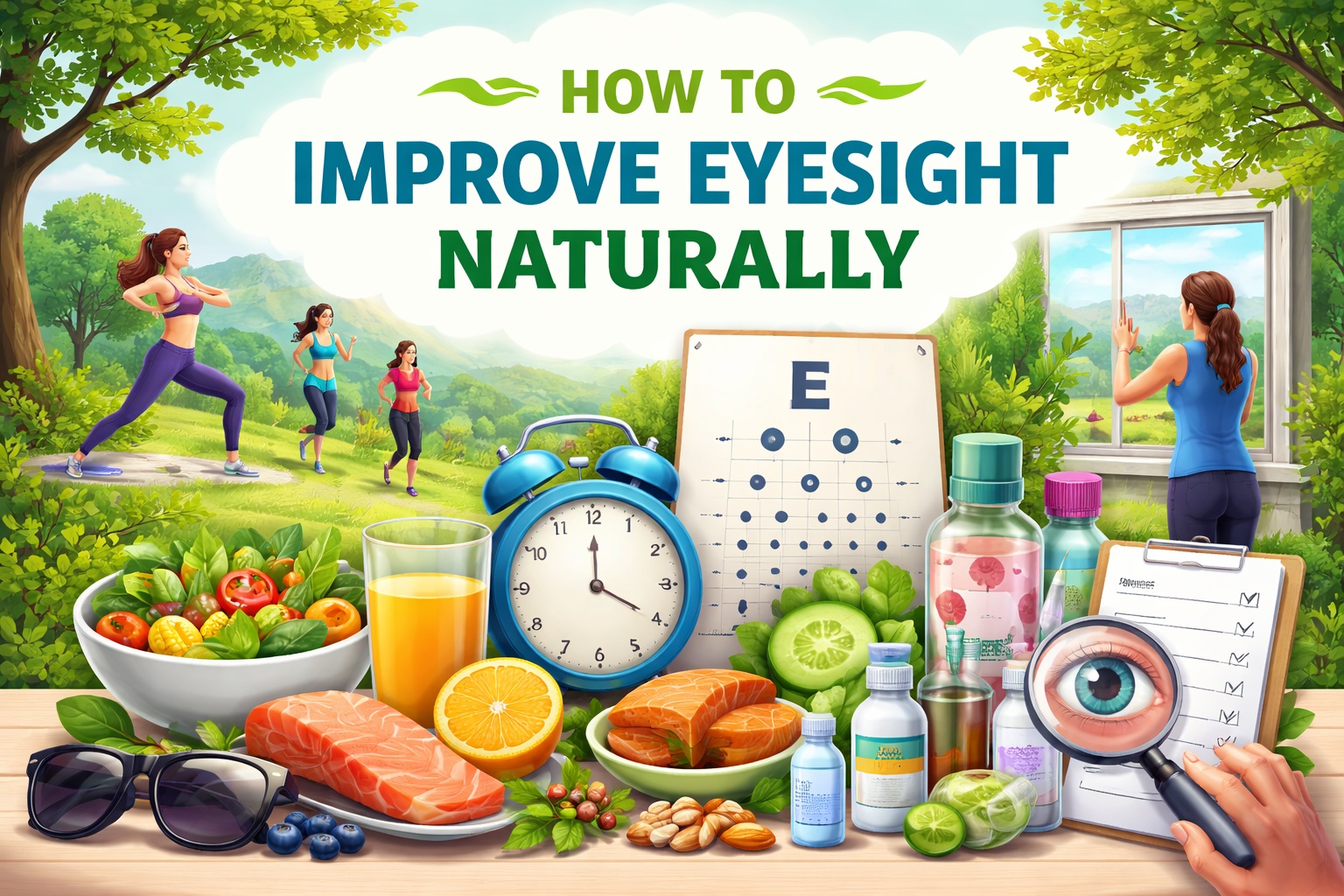
How to Improve Eyesight Naturally: Proven Tips
Introduction
Good eyesight plays a vital role in everyday life, from reading and working to driving and enjoying nature. With increasing screen time and unhealthy habits, many people experience vision problems such as eye strain, dryness, or blurred vision. While medical treatments and corrective lenses are available, there are also natural ways to support and improve your eyesight. By adopting healthy habits, nourishing your eyes with the right nutrients, and practicing simple exercises, you can protect your vision and even enhance it over time.
Understanding Eye Health
Before improving eyesight naturally, it’s important to understand how your eyes work. The eyes rely on a combination of muscles, nerves, and light-sensitive tissues to function properly. Factors such as aging, excessive screen exposure, poor diet, and lack of sleep can weaken these systems and affect vision quality.
Maintaining good eye health is not just about correcting vision problems—it’s about preventing them from getting worse and supporting long-term visual clarity.
Eat a Nutrient-Rich Diet
One of the most effective ways to improve eyesight naturally is through proper nutrition. Your eyes require essential vitamins and minerals to function efficiently.
Key Nutrients for Eye Health
- Vitamin A: Helps maintain a clear cornea and improves night vision. Found in carrots, sweet potatoes, and spinach.
- Vitamin C: Protects against oxidative stress and supports blood vessels in the eyes. Present in citrus fruits and berries.
- Vitamin E: Reduces the risk of age-related eye damage. Found in nuts and seeds.
- Omega-3 Fatty Acids: Help prevent dry eyes and support retinal function. Found in fish like salmon and flaxseeds.
- Lutein and Zeaxanthin: Improve visual performance and protect against harmful light. Found in leafy greens like kale and broccoli.
A balanced diet filled with colorful fruits and vegetables can significantly enhance eye health and prevent vision deterioration.
Practice Eye Exercises
Eye exercises can strengthen eye muscles, improve focus, and reduce strain caused by prolonged screen use.
Simple Exercises to Try
- 20-20-20 Rule: Every 20 minutes, look at something 20 feet away for 20 seconds to reduce eye strain.
- Focus Shifting: Hold your finger close to your eyes, then focus on an object far away. Alternate between the two.
- Eye Rolling: Gently roll your eyes in circular motions to improve flexibility.
- Palming Technique: Rub your hands together and place them over your eyes to relax them.
While these exercises won’t instantly cure vision problems, they can significantly reduce fatigue and improve comfort.
Reduce Screen Time and Digital Strain
In today’s digital world, excessive screen exposure is one of the leading causes of eye problems. Long hours on phones, laptops, and TVs can lead to digital eye strain, headaches, and blurred vision.
Tips to Protect Your Eyes
- Adjust screen brightness to match your surroundings
- Maintain proper distance from screens
- Use blue light filters or glasses
- Blink frequently to keep eyes moist
- Take regular breaks
By minimizing digital strain, you give your eyes the rest they need to function properly.
Get Enough Sleep
Sleep is essential for overall health, including your eyes. During sleep, your eyes repair and regenerate, reducing stress and dryness. Lack of sleep can lead to red, irritated eyes and blurred vision.
Aim for 7–8 hours of quality sleep every night to allow your eyes to recover and stay healthy.
Stay Hydrated
Dehydration can cause dry eyes, irritation, and discomfort. Drinking enough water helps maintain proper moisture levels in your eyes and supports tear production.
Make it a habit to drink at least 8 glasses of water daily to keep your eyes hydrated and functioning well.
Protect Your Eyes from Sunlight
Exposure to harmful ultraviolet (UV) rays can damage your eyes and increase the risk of cataracts and macular degeneration.
Protective Measures
- Wear sunglasses that block 100% UV rays
- Use hats or caps when outdoors
- Avoid direct sunlight during peak hours
Taking these precautions helps preserve your vision and prevent long-term damage.
Maintain Proper Lighting
Poor lighting conditions can strain your eyes, especially when reading or working. Dim lighting forces your eyes to work harder, leading to fatigue.
Best Practices
- Use adequate lighting while reading
- Avoid glare from screens
- Position lights behind you instead of directly in your eyes
Good lighting reduces stress on your eyes and improves visual comfort.
Quit Smoking
Smoking is harmful not only to your lungs but also to your eyes. It increases the risk of serious eye conditions such as cataracts and optic nerve damage.
Quitting smoking can significantly improve your eye health and reduce the chances of vision loss over time.
Regular Eye Checkups
Even if you are following natural methods, regular eye checkups are essential. Eye exams can detect problems early and prevent them from worsening.
Consult an eye specialist at least once a year to monitor your vision and ensure your eyes are in good condition.
Manage Stress Levels
Stress can negatively affect your overall health, including your eyesight. It may lead to eye twitching, blurred vision, or increased sensitivity to light.
Stress-Reducing Activities
- Meditation
- Deep breathing exercises
- Yoga
- Spending time in nature
Managing stress helps maintain a healthy balance in your body and supports better vision.
Use Natural Remedies
Certain natural remedies can provide additional support for eye health.
Popular Remedies
- Cold Compress: Reduces puffiness and soothes tired eyes
- Cucumber Slices: Hydrate and refresh the eyes
- Rose Water: Acts as a natural cleanser for eye irritation
While these remedies offer temporary relief, they should be combined with healthy habits for long-term benefits.
Improve Overall Lifestyle
Your lifestyle choices play a major role in your eye health. A combination of good nutrition, exercise, and proper habits can make a noticeable difference.
Healthy Lifestyle Tips
- Maintain a balanced diet
- Exercise regularly to improve blood circulation
- Avoid rubbing your eyes
- Keep your hands clean to prevent infections
Consistency in these habits can lead to gradual improvement in your eyesight.
Conclusion
Improving eyesight naturally requires a holistic approach that includes proper nutrition, regular eye exercises, reduced screen time, and a healthy lifestyle. While natural methods may not replace medical treatments for serious conditions, they can significantly enhance eye health and prevent further deterioration. By taking proactive steps and making small daily changes, you can protect your vision and enjoy clearer, healthier eyesight for years to come.