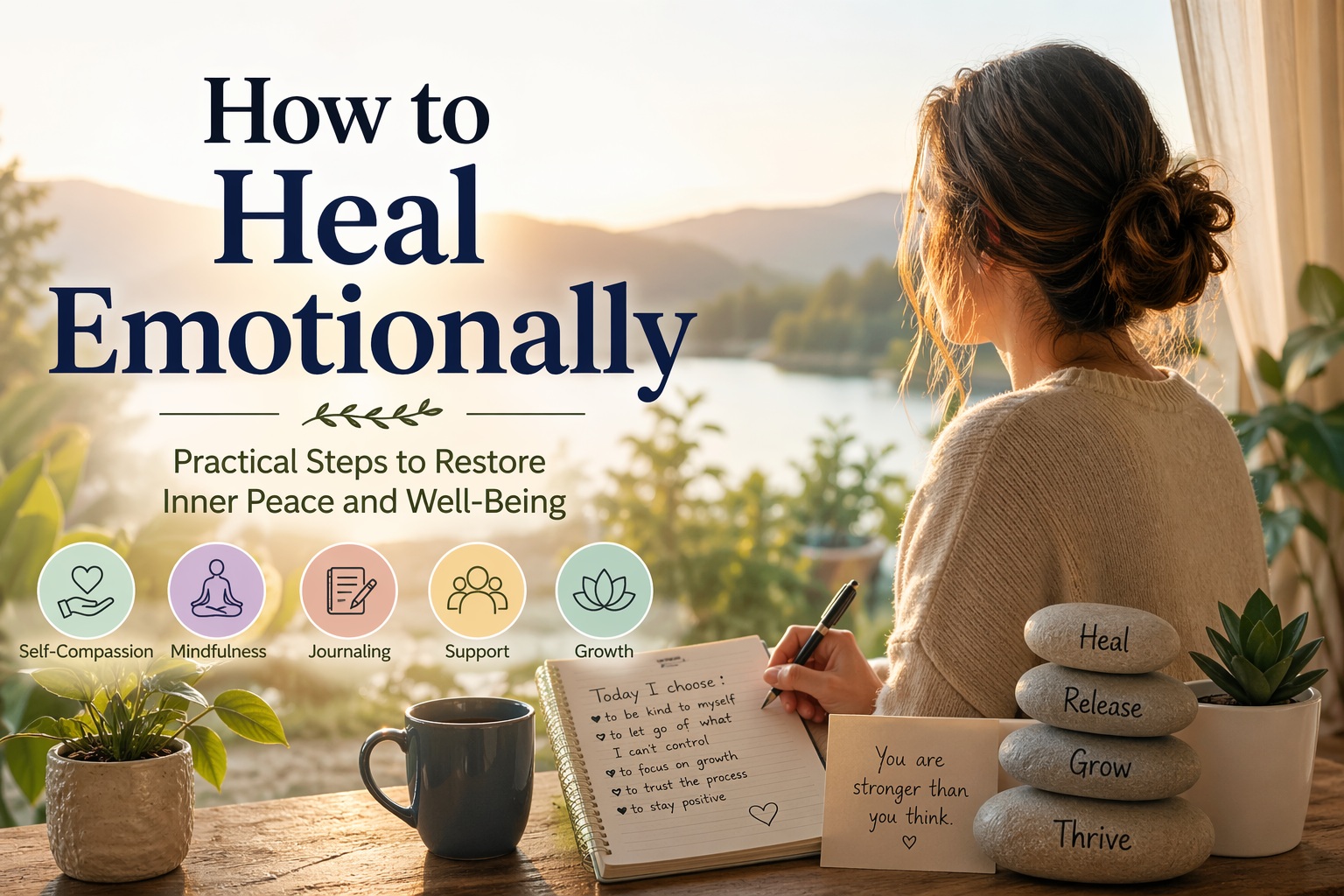
How to Heal Emotionally: A Complete Guide to Recovery
Introduction
Emotional healing is a deeply personal journey that allows you to recover from pain, trauma, stress, or difficult life experiences. Whether you are dealing with heartbreak, loss, anxiety, or past wounds, healing emotionally is essential for living a balanced and fulfilling life. It is not about forgetting what happened, but about learning how to process emotions, regain control, and move forward with strength and clarity.
In today’s fast-paced world, many people suppress their emotions rather than addressing them. However, ignoring emotional pain can lead to long-term mental and physical health issues. True healing begins when you acknowledge your feelings and take intentional steps toward recovery.
Understanding Emotional Healing
Emotional healing is the process of recognizing, accepting, and processing emotional pain. It involves letting go of negative patterns, forgiving yourself or others, and building healthier coping mechanisms. Healing does not happen overnight—it requires patience, self-awareness, and consistent effort.
Each person’s healing journey is unique. What works for one individual may not work for another. The key is to find methods that resonate with you and support your emotional well-being.
Signs You Need Emotional Healing
Before beginning the healing process, it’s important to recognize whether you need it. Some common signs include:
- Feeling overwhelmed or emotionally numb
- Difficulty trusting others
- Frequent anxiety or sadness
- Holding onto past pain or resentment
- Low self-esteem or self-worth
- Avoiding situations that trigger emotional discomfort
Recognizing these signs is the first step toward healing.
Steps to Heal Emotionally
1. Acknowledge Your Emotions
The first and most important step is to accept your feelings without judgment. Avoid suppressing or ignoring your emotions. Instead, allow yourself to feel them fully. Whether it’s sadness, anger, or fear, every emotion has a purpose.
2. Practice Self-Compassion
Be kind to yourself during the healing process. Avoid self-criticism and negative self-talk. Treat yourself the way you would treat a close friend going through a difficult time. Self-compassion helps create a safe internal environment for healing.
3. Express Your Feelings
Bottling up emotions can make healing more difficult. Find healthy ways to express your feelings, such as:
- Journaling your thoughts
- Talking to a trusted friend or therapist
- Engaging in creative activities like art or music
Expression helps release emotional tension and provides clarity.
4. Let Go of the Past
Holding onto past pain can prevent you from moving forward. While it’s important to learn from experiences, constantly reliving them can be harmful. Practice forgiveness—not necessarily for others, but for your own peace of mind.
Letting go doesn’t mean forgetting; it means freeing yourself from the emotional burden.
5. Build Healthy Habits
Your physical and emotional health are closely connected. Developing healthy habits can significantly improve your emotional well-being. Focus on:
- Regular exercise
- Balanced nutrition
- Quality sleep
- Mindfulness or meditation
These habits help regulate your mood and reduce stress.
6. Set Boundaries
Learning to say no and protecting your emotional space is crucial. Boundaries prevent others from draining your energy and allow you to prioritize your well-being.
7. Seek Professional Help
Sometimes, emotional wounds run deep and require professional support. Therapists and counselors can provide guidance, tools, and a safe space to process your emotions.
Seeking help is not a sign of weakness—it’s a step toward strength and recovery.
The Role of Mindfulness in Emotional Healing
Mindfulness is a powerful tool that helps you stay present and aware of your thoughts and emotions. Instead of being overwhelmed by feelings, mindfulness teaches you to observe them without judgment.
Practices such as meditation, deep breathing, and grounding exercises can help calm your mind and reduce emotional stress. Over time, mindfulness improves emotional resilience and self-awareness.
Building Emotional Resilience
Emotional resilience is your ability to adapt and recover from difficult situations. It doesn’t mean avoiding pain but learning how to navigate it effectively.
To build resilience:
- Develop a positive mindset
- Focus on what you can control
- Learn from challenges
- Surround yourself with supportive people
Resilience empowers you to face life’s challenges with confidence.
Common Mistakes to Avoid
Ignoring Your Emotions
Suppressing feelings can lead to emotional buildup and long-term issues.
Rushing the Healing Process
Healing takes time. Trying to “move on” too quickly can delay true recovery.
Isolating Yourself
While alone time is important, complete isolation can worsen emotional struggles. Stay connected with supportive individuals.
Comparing Your Journey
Everyone heals differently. Avoid comparing your progress with others.
Long-Term Strategies for Emotional Well-Being
Practice Gratitude
Focusing on what you’re thankful for can shift your mindset and improve emotional health.
Maintain Healthy Relationships
Surround yourself with people who uplift and support you.
Continue Self-Reflection
Regularly check in with yourself to understand your emotions and needs.
Invest in Personal Growth
Read, learn, and explore new skills that contribute to your overall development.
FAQs
How long does emotional healing take?
Emotional healing varies for each person. It can take weeks, months, or even years depending on the situation and individual effort.
Can emotional wounds ever fully heal?
Yes, emotional wounds can heal, but the experience may still be remembered. Healing means the pain no longer controls your life.
Is it normal to feel worse before feeling better?
Yes, confronting emotions can initially feel overwhelming. However, this is a natural part of the healing process.
Can I heal without therapy?
Many people heal through self-help strategies, but therapy can accelerate the process and provide deeper insights.
What is the fastest way to heal emotionally?
There is no quick fix. Consistent effort, self-awareness, and healthy coping strategies are the most effective approach.
Conclusion
Emotional healing is a journey that requires patience, courage, and commitment. By acknowledging your emotions, practicing self-care, and adopting healthy habits, you can gradually restore your inner peace. Remember, healing is not about becoming someone new—it’s about rediscovering your true self without the weight of past pain.
Take one step at a time, and trust the process. Over time, you will find strength, clarity, and a renewed sense of purpose.