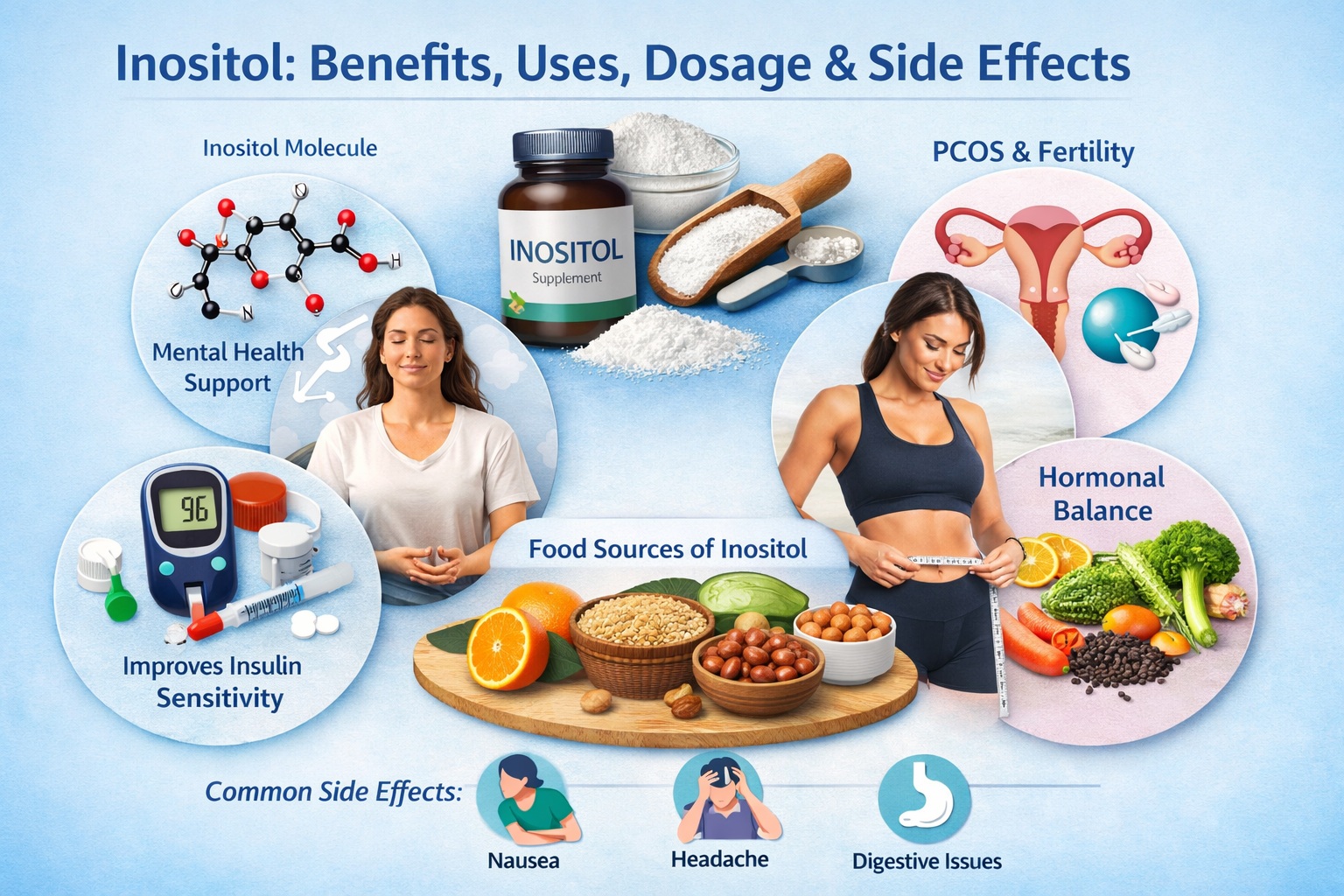
Inositol Benefits, Uses, Dosage & Side Effects Guide
Inositol: Benefits, Uses, Dosage, and Safety Guide
Inositol is a naturally occurring compound often referred to as a type of sugar alcohol, although it functions more like a vitamin in the body. Commonly associated with the B-vitamin family, inositol plays a vital role in cellular processes, brain function, and hormone regulation. It is found in foods such as fruits, beans, grains, and nuts, and is also widely available as a dietary supplement.
In recent years, inositol has gained popularity for its potential benefits in managing mental health conditions, improving fertility, and supporting metabolic health. This guide provides a comprehensive overview of inositol, including its types, benefits, recommended dosage, and safety considerations.
What Is Inositol?
Inositol is a carbohydrate that helps form cell membranes and influences insulin activity, neurotransmitters, and hormonal signaling. The body can produce inositol from glucose, but it is also obtained through diet.
There are several forms of inositol, but the two most important are:
- Myo-inositol: The most abundant form, involved in cell signaling and widely used for mental health and reproductive health.
- D-chiro-inositol: Works closely with myo-inositol, particularly in insulin regulation and metabolic processes.
These two forms often work together to maintain balance in the body, especially in hormonal and metabolic functions.
Health Benefits of Inositol
Supports Mental Health
One of the most researched benefits of inositol is its role in mental well-being. It helps regulate neurotransmitters such as serotonin and dopamine, which influence mood and emotional stability.
Studies suggest that inositol may help with:
- Anxiety disorders
- Depression
- Panic attacks
- Obsessive-compulsive disorder (OCD)
By improving communication between brain cells, inositol may reduce symptoms of stress and promote a calmer mental state.
Helps Manage Polycystic Ovary Syndrome (PCOS)
Inositol is widely used as a natural support for women with PCOS, a hormonal disorder that affects ovulation and fertility.
Benefits for PCOS include:
- Improved insulin sensitivity
- Regulation of menstrual cycles
- Enhanced ovulation
- Reduction in androgen (male hormone) levels
Myo-inositol and D-chiro-inositol are often combined in a specific ratio to optimize these effects, making it a popular supplement for reproductive health.
Improves Insulin Sensitivity
Inositol plays a crucial role in how the body processes insulin, the hormone responsible for regulating blood sugar levels.
It may help:
- Lower blood glucose levels
- Reduce insulin resistance
- Support individuals with prediabetes or type 2 diabetes
This makes inositol particularly beneficial for people with metabolic syndrome or conditions linked to poor glucose control.
Supports Fertility
In addition to helping with PCOS, inositol may improve fertility in both women and men.
For women:
- Promotes healthy egg development
- Improves ovarian function
- Supports hormonal balance
For men:
- May improve sperm quality and motility
These benefits make inositol a valuable supplement for couples trying to conceive.
May Aid in Weight Management
By improving insulin sensitivity and hormonal balance, inositol can indirectly support weight management. It may help reduce cravings, stabilize blood sugar levels, and improve metabolism.
While not a weight-loss supplement on its own, it can complement a healthy diet and lifestyle.
Supports Skin Health
Inositol may also have a positive effect on skin conditions, particularly those linked to hormonal imbalances, such as acne. By reducing excess androgen levels, it can help improve skin clarity over time.
Food Sources of Inositol
Although supplements are popular, inositol is naturally found in many foods, including:
- Citrus fruits like oranges and grapefruits
- Beans and lentils
- Whole grains such as brown rice and oats
- Nuts and seeds
- Leafy green vegetables
A balanced diet can provide a moderate amount of inositol, but higher therapeutic doses typically require supplementation.
Recommended Dosage
The appropriate dosage of inositol depends on the intended use and individual health conditions.
General guidelines include:
- For general wellness: 500 mg to 2,000 mg per day
- For mental health support: 2,000 mg to 12,000 mg per day (divided doses)
- For PCOS: 2,000 mg of myo-inositol combined with 50 mg of D-chiro-inositol, taken twice daily
It is important to start with a lower dose and gradually increase it to minimize potential side effects. Consulting a healthcare professional before starting supplementation is always recommended.
Possible Side Effects
Inositol is generally considered safe for most people when taken in appropriate doses. However, some individuals may experience mild side effects, especially at higher doses.
Common side effects include:
- Nausea
- Bloating
- Diarrhea
- Headache
- Dizziness
These symptoms are usually temporary and can often be reduced by lowering the dosage.
Who Should Avoid Inositol?
While inositol is safe for many individuals, certain groups should exercise caution:
- Pregnant or breastfeeding women (unless advised by a doctor)
- People taking medications for mental health conditions
- Individuals with chronic medical conditions
Always consult a healthcare provider before adding any new supplement to your routine.
Inositol vs. Other Supplements
Inositol is often compared to other supplements used for similar purposes, such as omega-3 fatty acids, magnesium, and B vitamins.
Unlike many supplements, inositol directly influences cellular signaling and hormone pathways. Its unique ability to improve both mental health and metabolic function sets it apart as a multifunctional compound.
For best results, inositol can be combined with a healthy lifestyle, including balanced nutrition, regular exercise, and stress management.
How to Choose a Quality Inositol Supplement
When selecting an inositol supplement, consider the following factors:
- Look for products that specify the type (myo-inositol or D-chiro-inositol)
- Choose reputable brands with third-party testing
- Check for minimal additives and fillers
- Ensure proper dosage according to your needs
Powder forms are often preferred for higher doses, while capsules offer convenience for daily use.
Final Thoughts
Inositol is a versatile and well-researched compound that offers a wide range of health benefits. From supporting mental well-being to improving hormonal balance and metabolic health, it has become a valuable supplement for many individuals.
Whether you are managing PCOS, seeking better mood stability, or aiming to improve overall wellness, inositol may provide a natural and effective solution. However, like any supplement, it should be used thoughtfully and in consultation with a healthcare professional.
By incorporating inositol into a balanced lifestyle, you can take a proactive step toward better health and long-term well-being.