Headache vs Migraine: Symptoms, Causes & Key Differences
Introduction
Head pain is one of the most common health complaints worldwide, yet not all head pain is the same. Many people use the terms “headache” and “migraine” interchangeably, but they are actually quite different conditions. Understanding these differences is essential for proper treatment, prevention, and overall well-being. While a headache may be a temporary discomfort, a migraine is a complex neurological condition that can significantly affect daily life.
This guide explains the key differences between headaches and migraines, including their symptoms, causes, triggers, and treatment options, so you can better identify what you’re experiencing and take the right steps toward relief.
What Is a Headache?
A headache refers to pain or discomfort in the head, scalp, or neck. It is a broad term that includes various types, each with different causes and characteristics. The most common type is the tension headache, often caused by stress, muscle tension, or fatigue.
Headaches can range from mild to moderate in intensity and typically do not interfere severely with daily activities. They may feel like a constant pressure or tightness around the forehead or the back of the head.
Common Types of Headaches
- Tension headaches: The most frequent type, often linked to stress and muscle strain
- Cluster headaches: Severe headaches that occur in cycles or clusters
- Sinus headaches: Caused by sinus infections or inflammation
Headaches are usually short-lived and manageable with rest, hydration, or over-the-counter medications.
What Is a Migraine?
A migraine is a neurological condition characterized by intense, recurring headaches often accompanied by other symptoms. Unlike regular headaches, migraines involve complex changes in brain activity and can last for hours or even days.
Migraines are often associated with throbbing or pulsating pain, typically on one side of the head. They can be severe enough to disrupt normal daily functioning.
Many people with migraines experience additional symptoms such as nausea, vomiting, and sensitivity to light and sound. Some may also experience visual disturbances known as aura before the migraine begins.
Migraines are considered a chronic condition and may require specific medical management. They are often linked to conditions like Migraine and can sometimes overlap with other disorders such as Chronic Migraine.
Key Differences Between Headaches and Migraines
Pain Intensity and Nature
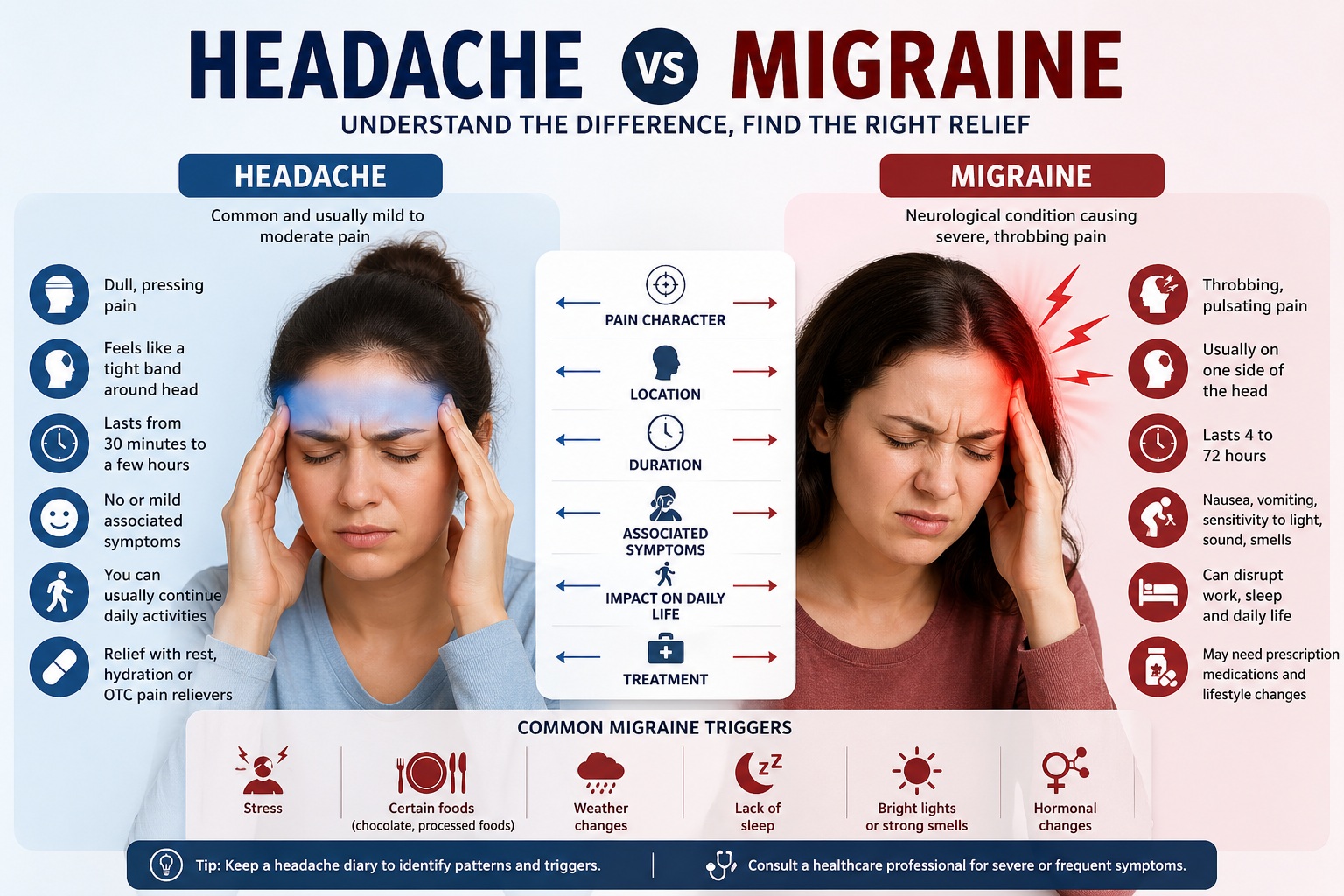
Headaches usually cause mild to moderate pain that feels like pressure or tightness. Migraines, on the other hand, produce intense, throbbing pain that can be debilitating.
Location of Pain
Headaches often affect both sides of the head, while migraines typically occur on one side, although they can shift sides or affect the entire head in some cases.
Duration
A typical headache may last from 30 minutes to a few hours. Migraines can last anywhere from 4 hours to 72 hours if untreated.
Associated Symptoms
Headaches usually do not come with additional symptoms beyond pain. Migraines are often accompanied by nausea, vomiting, and sensitivity to light, sound, or smells.
Impact on Daily Life
Most headaches allow you to continue daily activities, even if uncomfortable. Migraines can be so severe that they require complete rest in a dark, quiet room.
Warning Signs (Aura)
Migraines may include aura symptoms such as flashing lights, blind spots, or tingling sensations before the pain begins. Headaches do not typically involve these warning signs.
Causes of Headaches
Headaches can have a wide range of causes, including:
- Stress and anxiety
- Poor posture
- Dehydration
- Lack of sleep
- Eye strain
- Hunger or skipped meals
In many cases, headaches are triggered by lifestyle factors and can be prevented with simple changes.
Causes of Migraines
Migraines are more complex and often involve neurological and genetic factors. While the exact cause is not fully understood, they are believed to be related to abnormal brain activity affecting nerve signals, chemicals, and blood vessels.
Common migraine triggers include:
- Hormonal changes
- Certain foods such as chocolate or processed items
- Strong smells or bright lights
- Weather changes
- Stress or emotional factors
- Lack of sleep or irregular sleep patterns
Migraines are also linked to conditions like Aura and may occur more frequently in individuals with a family history of migraines.
Diagnosis: How to Tell the Difference
Distinguishing between a headache and a migraine often comes down to recognizing patterns and symptoms.
If your pain is mild, short-lived, and not accompanied by other symptoms, it is likely a headache. However, if the pain is severe, recurring, and includes symptoms like nausea or sensitivity to light, it may be a migraine.
Doctors typically diagnose migraines based on medical history, symptom patterns, and physical examination. In some cases, imaging tests may be recommended to rule out other conditions.
Treatment Options
Treating Headaches
Most headaches can be treated with simple remedies such as:
- Rest and relaxation
- Drinking plenty of water
- Over-the-counter pain relievers
- Applying a cold or warm compress
Lifestyle adjustments, such as improving posture and managing stress, can also help prevent frequent headaches.
Treating Migraines
Migraine treatment is more specialized and may include:
- Prescription medications to relieve pain or prevent attacks
- Anti-nausea medications
- Rest in a quiet, dark environment
- Avoiding known triggers
For chronic cases, preventive therapies may be recommended to reduce the frequency and severity of attacks.
When to See a Doctor
While most headaches are harmless, certain symptoms require medical attention. Seek professional help if you experience:
- Sudden, severe head pain
- Headaches after a head injury
- Persistent headaches that worsen over time
- Neurological symptoms such as confusion or vision loss
Frequent or severe migraines should also be evaluated by a healthcare provider to develop an effective treatment plan.
Prevention Tips
Preventing headaches and migraines often involves identifying and avoiding triggers. Here are some helpful strategies:
- Maintain a consistent sleep schedule
- Stay hydrated
- Eat balanced meals regularly
- Manage stress through relaxation techniques
- Limit caffeine and processed foods
- Keep a headache diary to track patterns and triggers
Making these lifestyle changes can significantly reduce the frequency of both headaches and migraines.
FAQs
What is the main difference between a headache and a migraine?
The main difference lies in severity and symptoms. A headache is usually mild to moderate and limited to pain, while a migraine is more intense and includes symptoms like nausea and sensitivity to light.
Can a headache turn into a migraine?
In some cases, what starts as a mild headache can develop into a migraine, especially if triggered by factors like stress or lack of sleep.
Are migraines dangerous?
Migraines are not typically life-threatening, but they can significantly affect quality of life and may require medical treatment.
How long does a migraine last compared to a headache?
A headache usually lasts a few hours, while a migraine can last from several hours to up to three days.
What triggers migraines the most?
Common triggers include stress, hormonal changes, certain foods, lack of sleep, and environmental factors like bright lights or strong smells.
Can lifestyle changes help prevent migraines?
Yes, maintaining a healthy lifestyle, managing stress, and avoiding triggers can greatly reduce migraine frequency and severity.
Conclusion
Although headaches and migraines both involve head pain, they are fundamentally different in terms of intensity, symptoms, and impact. Headaches are usually manageable and short-lived, while migraines are a complex neurological condition that can disrupt daily life.
Recognizing these differences is the first step toward effective treatment and prevention. By understanding your symptoms and triggers, you can take control of your health and find the most appropriate way to manage your condition.