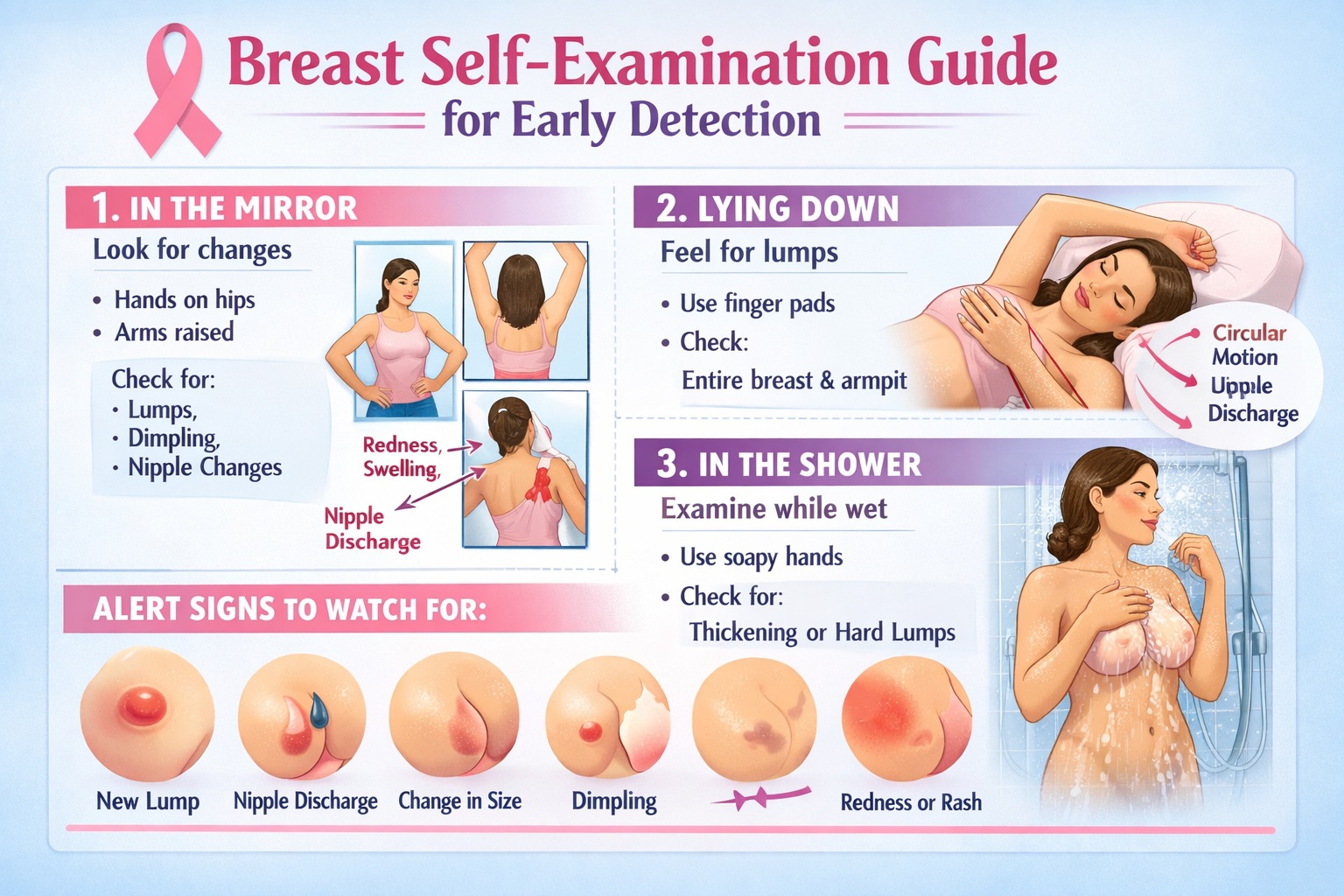
Breast Self-Examination Guide for Early Detection
Breast Self-Examination: A Step Towards Early Detection
Breast self-examination (BSE) is an essential and simple practice that allows women to monitor their breast health regularly. While it is not a replacement for professional screenings like mammography or clinical exams, BSE empowers women to identify changes or abnormalities in the breast tissue at an early stage. According to the World Health Organization, early detection of breast irregularities significantly improves outcomes and survival rates.
Incorporating regular self-exams into your health routine can help in detecting lumps, swelling, or other changes before they become serious. Awareness of your body’s normal patterns is the first step toward proactive breast health management.
Why Breast Self-Examination is Crucial
Breast cancer is among the most common cancers affecting women globally. Understanding and practicing self-examination can aid in early detection, which is critical for treatment success.
1. Detect Abnormal Changes Early
Regular self-exams help women notice unusual lumps, thickening, or changes in breast shape and skin, allowing for prompt medical consultation.
2. Increase Awareness of Normal Breast Patterns
Women who perform BSE consistently develop a better understanding of their normal breast structure. This familiarity makes detecting anomalies much easier.
3. Supports Clinical Screenings
Self-examination complements professional screenings, including mammograms and doctor visits. It serves as an additional layer of awareness and vigilance.
Ideal Timing for Breast Self-Examination
The timing of self-exams is important for consistent results:
- Menstruating women: The best time is 3–5 days after the period ends, when hormonal fluctuations are minimal.
- Postmenopausal women: Choose a consistent day each month to perform BSE.
Maintaining a monthly routine ensures that any changes are detected promptly. Setting reminders can help establish this habit.
Step-by-Step Guide to Breast Self-Examination
Performing BSE correctly is key to detecting potential abnormalities. Follow these steps:
1. Visual Examination in Front of a Mirror
Stand with your shoulders straight and hands on your hips. Check for:
- Differences in size or shape of the breasts
- Skin changes such as dimpling or puckering
- Nipple position or discharge
- Swelling or redness
Raise your arms and repeat the visual check to observe any subtle changes.
2. Manual Examination While Lying Down
Lying down helps spread the breast tissue evenly, making lumps easier to feel:
- Place a pillow under your shoulder and use the opposite hand to examine the breast.
- Use gentle, circular motions with your finger pads.
- Cover the entire breast area, including the armpits.
- Move from the outer edge toward the nipple systematically.
Avoid pressing too hard, as breast tissue is delicate.
3. Examination While Standing or Showering
Many women find BSE easier in the shower:
- Wet skin reduces friction, making the tissue easier to palpate.
- Repeat the circular motion technique and cover the entire breast area.
Consistency and thoroughness are more important than speed.
Signs to Watch For During BSE
While performing self-examination, it’s essential to be aware of warning signs. These may include:
- Hard lumps or thickened areas
- Swelling or enlargement of one breast
- Skin changes such as dimpling, redness, or rash
- Nipple inversion or unusual discharge, especially bloody
- Persistent localized pain
- Changes in breast size or contour
If any of these are observed, contact a healthcare professional immediately for evaluation.
Common Mistakes to Avoid
Even well-intentioned self-exams can be less effective if common mistakes occur:
- Panic after finding a small lump: Most lumps are benign, but medical evaluation is necessary.
- Inconsistent routine: Missing months reduces early detection benefits.
- Applying excessive pressure: Can cause discomfort or miss superficial abnormalities.
- Ignoring family history: Women with a history of breast cancer should be especially vigilant.
Who Should Practice Breast Self-Examination?
BSE is recommended for all adult women. However, certain groups may benefit more:
- Women over the age of 20
- Women with a family history of breast cancer
- Women undergoing hormonal therapy
- Women experiencing breast discomfort
Practicing regular self-exams fosters proactive breast health management.
Limitations of Breast Self-Examination
While BSE is helpful, it is not a comprehensive screening tool:
- Some deep or small tumors may not be detected manually.
- Internal abnormalities require professional imaging.
- Clinical breast exams and mammograms remain essential for full protection.
When to Seek Medical Attention
Prompt consultation is crucial if you notice:
- Persistent or hard lumps
- Nipple inversion or discharge
- Pain localized to one area
- Skin changes such as dimpling or redness
- Swelling in the armpit
Early medical evaluation significantly improves treatment outcomes.
Lifestyle Factors Supporting Breast Health
In addition to BSE, certain lifestyle habits can promote breast wellness:
- Balanced diet: Include fruits, vegetables, and fiber-rich foods.
- Regular exercise: Helps maintain hormonal balance.
- Limit alcohol and avoid smoking: Reduces cancer risk.
- Maintain healthy body weight: Obesity can increase breast disease risk.
Importance of Awareness and Education
Promoting awareness and education around breast health is vital. Programs that teach women how to perform self-exams contribute to early detection and improved outcomes. Organizations like the World Health Organization emphasize the importance of combining self-awareness with regular clinical screening for optimal breast health management.
Conclusion
Breast self-examination is a simple, cost-free, and effective way to take control of your breast health. It increases awareness, supports early detection, and encourages timely medical consultation. While it cannot replace clinical exams and mammograms, combining self-exams with professional care offers the best chance for early detection and successful treatment.
Make BSE a monthly habit and stay proactive about your breast health—your body will thank you for it.