Androgenetic Alopecia: Causes, Symptoms, and Effective Treatments
What Is Androgenetic Alopecia?
Androgenetic Alopecia is the most common form of hair loss affecting both men and women. Often referred to as male pattern baldness or female pattern hair loss, this condition develops gradually and is largely influenced by genetics and hormones.
Millions of people worldwide experience androgenetic alopecia, which typically begins during adulthood but may start earlier in some individuals. Although it does not cause physical pain or serious health complications, it can significantly affect a person’s confidence and self-image.
Understanding how androgenetic alopecia develops and the available treatment options can help individuals manage the condition more effectively and maintain healthier hair.
How Hair Growth Normally Works
To understand androgenetic alopecia, it is helpful to first know how the hair growth cycle functions.
Hair grows in three main stages:
1. Anagen Phase (Growth Phase)
This is the active growth stage where hair follicles produce new hair. It can last 2 to 7 years.
2. Catagen Phase (Transition Phase)
A short transitional stage lasting about 2–3 weeks, during which the hair follicle shrinks.
3. Telogen Phase (Resting Phase)
In this phase, hair rests before eventually shedding. Normally, people lose 50–100 hairs per day as part of this natural cycle.
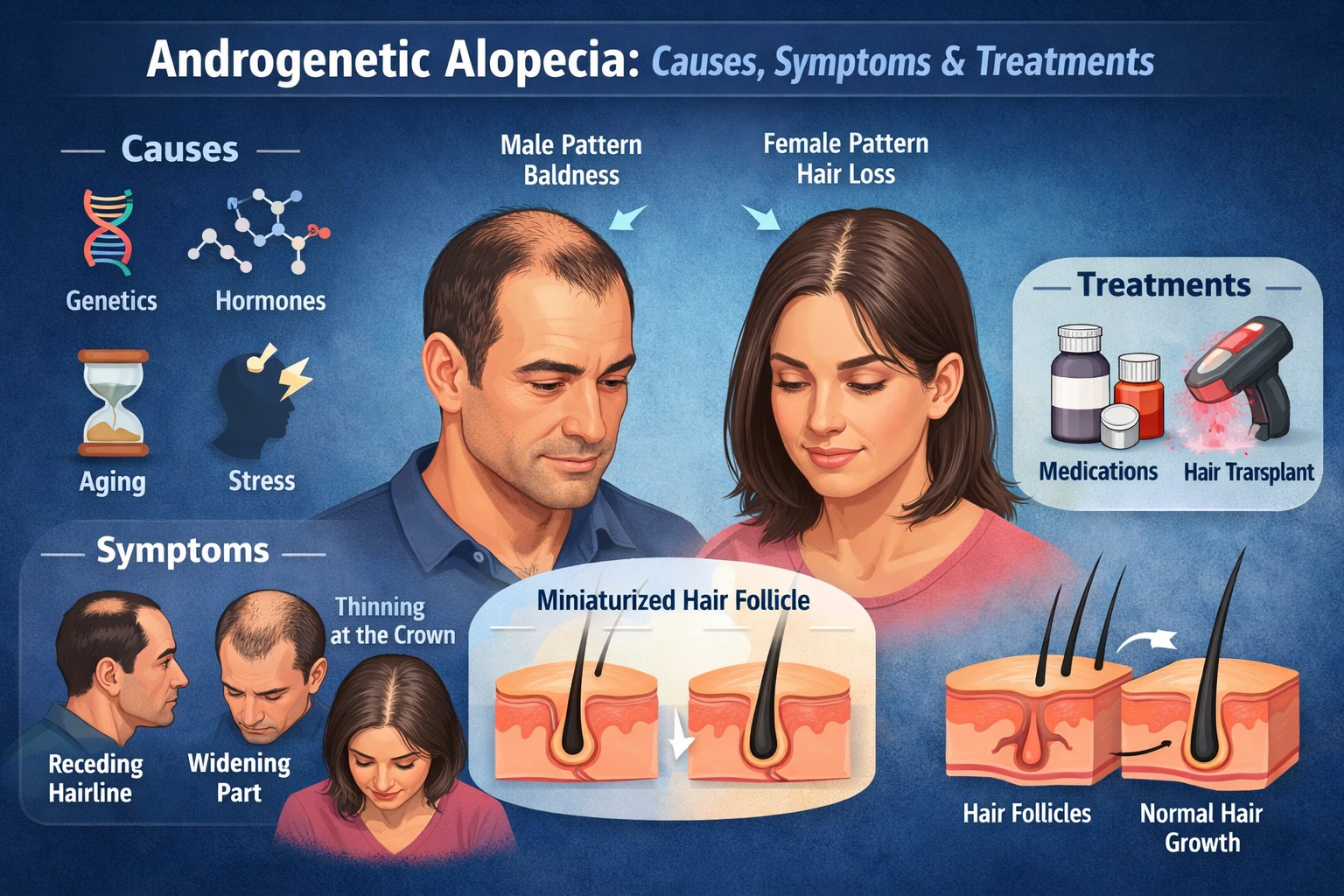
In androgenetic alopecia, the growth cycle becomes disrupted. Hair follicles shrink, producing thinner and shorter hair strands over time until growth eventually stops.
Causes of Androgenetic Alopecia
Several factors contribute to the development of androgenetic alopecia, but the most important ones are genetics and hormones.
Genetic Predisposition
Family history plays a significant role. If one or both parents experienced pattern hair loss, there is a higher chance their children may develop the condition as well.
Hormonal Influence
A hormone called dihydrotestosterone (DHT) plays a major role in androgenetic alopecia. DHT is derived from testosterone and can shrink hair follicles in individuals who are genetically sensitive to it.
Over time, this shrinkage causes:
- Shorter hair growth cycles
- Thinner hair strands
- Reduced hair density
Eventually, affected follicles may stop producing visible hair altogether.
Age
Hair loss becomes more common as people age. While it can start in the 20s or 30s, the likelihood increases significantly after the age of 40.
Other Contributing Factors
Although genetics and hormones are the primary causes, other elements may worsen hair loss, including:
- Chronic stress
- Poor nutrition
- Certain medications
- Hormonal imbalances
Symptoms of Androgenetic Alopecia
The symptoms of androgenetic alopecia vary between men and women.
Male Pattern Hair Loss
Men typically experience:
- Receding hairline at the temples
- Thinning at the crown
- Gradual formation of bald spots
Over time, these areas may merge, resulting in partial or complete baldness.
Female Pattern Hair Loss
Women usually notice:
- Overall thinning across the scalp
- A widening part line
- Reduced hair volume
Unlike men, women rarely experience complete baldness, but the thinning can still be noticeable.
How Androgenetic Alopecia Is Diagnosed
Healthcare professionals usually diagnose androgenetic alopecia through:
Medical History
Doctors ask about:
- Family history of hair loss
- Duration of symptoms
- Lifestyle and diet
Physical Examination
A dermatologist may examine the scalp and hair pattern to identify signs of follicle miniaturization.
Additional Tests
In some cases, tests may be recommended to rule out other conditions, such as:
- Iron Deficiency Anemia
- Thyroid Disease
- Alopecia Areata
These conditions can also cause hair thinning and may require different treatments.
Treatment Options for Androgenetic Alopecia
Although androgenetic alopecia cannot always be completely cured, several treatments can slow hair loss and stimulate regrowth.
Medications
Certain medications are commonly used to treat pattern hair loss.
Topical treatments can help stimulate hair follicles and extend the hair growth phase.
Oral medications may help reduce the production of DHT, which is responsible for follicle shrinkage.
These treatments are most effective when started early and used consistently.
Hair Transplant Surgery
Hair transplant procedures involve moving healthy hair follicles from one part of the scalp to areas experiencing thinning or baldness.
Modern techniques provide natural-looking results and have become increasingly popular for individuals with advanced hair loss.
However, surgery may not be suitable for everyone and should always be discussed with a qualified medical professional.
Low-Level Laser Therapy
Low-level laser therapy (LLLT) uses light energy to stimulate hair follicles and improve scalp circulation.
Some studies suggest that it may help promote hair growth when used regularly.
Lifestyle and Nutritional Support
Healthy lifestyle habits can support overall hair health and may slow the progression of hair loss.
Important nutrients for hair growth include:
- Protein
- Iron
- Zinc
- Biotin
- Vitamin D
A balanced diet and proper scalp care can help create a healthier environment for hair follicles.
Can Androgenetic Alopecia Be Prevented?
Because genetics play a major role, androgenetic alopecia cannot always be prevented. However, certain habits may help slow its progression.
Helpful practices include:
- Maintaining a balanced diet
- Managing stress effectively
- Avoiding harsh hair treatments
- Using gentle hair care products
- Seeking early medical advice
Early intervention often produces better outcomes.
When to See a Doctor
It is advisable to consult a healthcare professional if you notice:
- Sudden or excessive hair shedding
- Rapid thinning of hair
- Bald patches on the scalp
- Hair loss accompanied by other symptoms such as fatigue or weight changes
A medical evaluation can help determine whether the hair loss is caused by androgenetic alopecia or another underlying condition.
Final Thoughts
Androgenetic alopecia is the most common cause of hair loss worldwide, affecting both men and women. While the condition is primarily driven by genetics and hormones, modern treatments and proper hair care strategies can significantly slow its progression.
Early diagnosis, consistent treatment, and healthy lifestyle habits can help individuals maintain thicker, healthier hair for longer. If you are experiencing noticeable hair thinning, consulting a dermatologist can help you explore the most effective solutions for your specific condition.