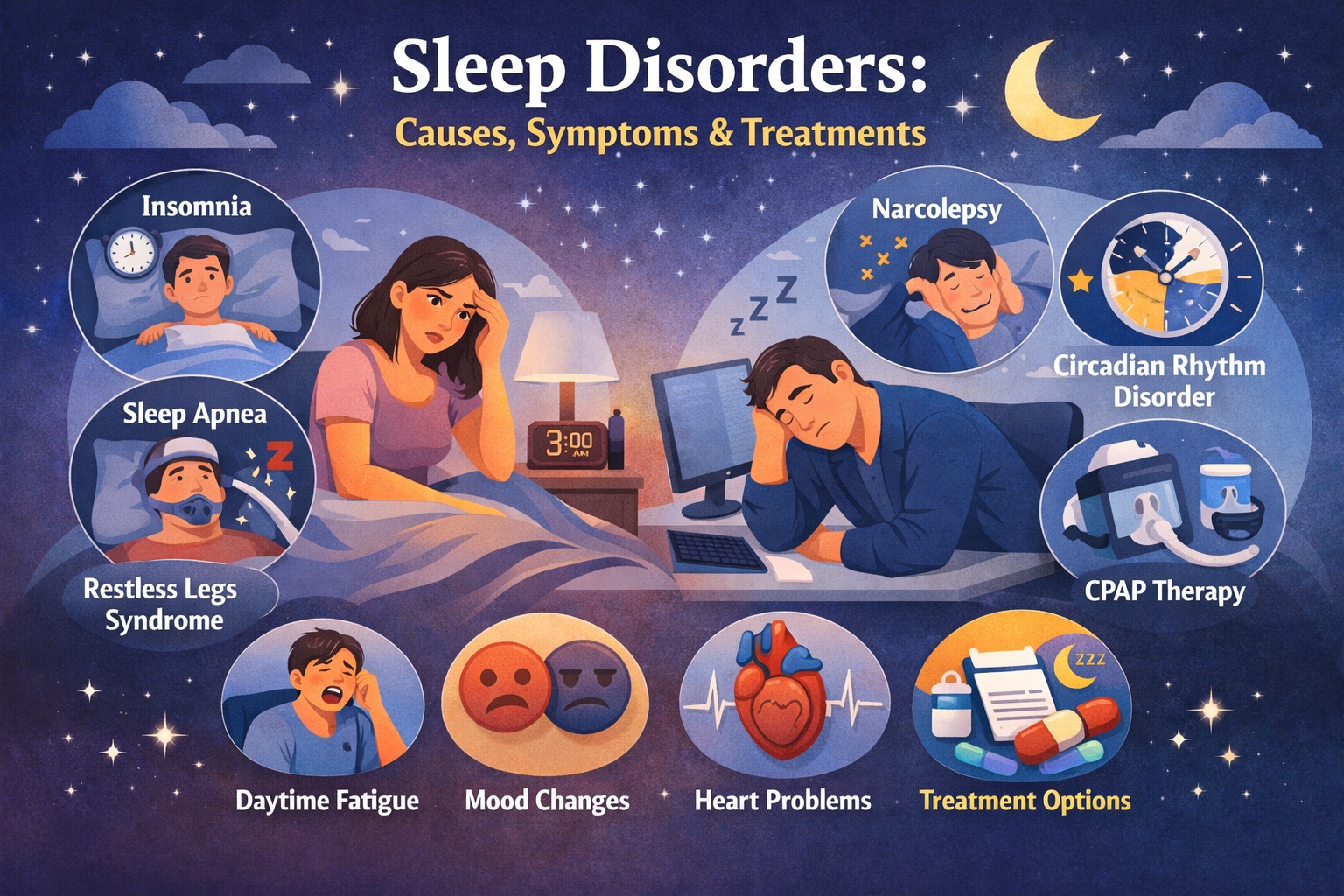
Sleep Disorders: Causes, Symptoms, Types & Effective Treatments
Introduction to Sleep Disorders
Sleep is one of the most essential functions for maintaining physical health, mental clarity, and emotional well-being. Despite its importance, millions of people worldwide struggle with various sleep disorders that disrupt their ability to get restful and restorative sleep. Sleep disorders are medical conditions that interfere with normal sleep patterns, making it difficult to fall asleep, stay asleep, or achieve quality rest.
Poor sleep can negatively affect daily life, leading to fatigue, difficulty concentrating, irritability, and decreased productivity. Over time, untreated sleep disorders may also contribute to serious health problems such as heart disease, obesity, diabetes, and weakened immune function. Understanding the different types of sleep disorders, their symptoms, and possible treatments can help individuals take the necessary steps toward better sleep health.
What Are Sleep Disorders?
Sleep disorders are conditions that affect a person’s ability to sleep well on a regular basis. These conditions can be caused by stress, lifestyle habits, underlying medical issues, or neurological factors. While occasional sleep difficulties are common, sleep disorders involve persistent problems that significantly interfere with normal daily functioning.
People with sleep disorders often experience difficulty falling asleep, frequent awakenings during the night, excessive daytime sleepiness, or irregular sleep cycles. These disruptions can reduce sleep quality and prevent the body from completing the natural sleep stages needed for physical and mental recovery.
Common Types of Sleep Disorders
There are several different sleep disorders, each with unique causes and symptoms.
Insomnia
Insomnia is the most common sleep disorder and involves difficulty falling asleep or staying asleep. People with insomnia may wake up frequently during the night or wake up too early and struggle to fall back asleep.
Chronic insomnia can be caused by stress, anxiety, depression, poor sleep habits, or certain medications. Individuals with insomnia often feel tired during the day but still struggle to sleep at night.
Sleep Apnea
Sleep apnea is a serious condition in which breathing repeatedly stops and starts during sleep. The most common type, obstructive sleep apnea, occurs when throat muscles relax and block the airway.
Symptoms may include loud snoring, gasping for air during sleep, morning headaches, and excessive daytime fatigue. If untreated, sleep apnea can increase the risk of heart disease, high blood pressure, and stroke.
Restless Legs Syndrome (RLS)
Restless Legs Syndrome is a neurological condition that causes an uncontrollable urge to move the legs, usually during periods of rest or sleep. The sensation is often described as tingling, crawling, or itching in the legs.
These uncomfortable feelings can make it difficult to fall asleep or stay asleep, leading to chronic sleep deprivation.
Narcolepsy
Narcolepsy is a neurological disorder that affects the brain’s ability to regulate sleep-wake cycles. People with narcolepsy may experience sudden episodes of sleep during the day, even while talking, working, or driving.
Other symptoms can include sleep paralysis, vivid dreams, and sudden loss of muscle control known as cataplexy.
Circadian Rhythm Disorders
Circadian rhythm disorders occur when a person’s internal body clock is misaligned with the natural day-night cycle. This can happen due to shift work, jet lag, or irregular sleep schedules.
People with these disorders may feel sleepy at unusual times or have difficulty maintaining a consistent sleep routine.
Symptoms of Sleep Disorders
Sleep disorders can present in many different ways depending on the specific condition. However, some common symptoms include:
- Difficulty falling asleep at night
- Waking up frequently during sleep
- Feeling tired even after a full night’s sleep
- Excessive daytime sleepiness
- Loud snoring or breathing interruptions during sleep
- Trouble concentrating or remembering information
- Mood changes such as irritability or anxiety
- Morning headaches
If these symptoms occur regularly and affect daily functioning, it may indicate an underlying sleep disorder that requires medical attention.
Causes and Risk Factors
Sleep disorders can develop for many reasons, and often multiple factors contribute to the problem.
Stress and Mental Health
Stress, anxiety, and depression are among the most common causes of sleep problems. Racing thoughts and emotional distress can make it difficult for the brain to relax and transition into sleep.
Poor Sleep Habits
Lifestyle choices can significantly impact sleep quality. Irregular sleep schedules, excessive screen time before bed, caffeine consumption late in the day, and lack of physical activity can all interfere with natural sleep patterns.
Medical Conditions
Certain health conditions such as chronic pain, respiratory issues, neurological disorders, and hormonal imbalances can contribute to sleep disturbances.
Medications and Substances
Some medications may cause insomnia or disrupt sleep cycles. Alcohol, nicotine, and stimulants can also interfere with the body’s ability to enter deep sleep stages.
Effects of Poor Sleep on Health
Sleep is vital for restoring energy, repairing tissues, and maintaining cognitive performance. When sleep disorders disrupt these processes, the body and mind can suffer significant consequences.
Chronic sleep deprivation may lead to reduced immune function, making individuals more vulnerable to infections and illnesses. It can also increase the risk of cardiovascular disease, weight gain, and metabolic disorders such as diabetes.
Mental health is also closely connected to sleep quality. Poor sleep can worsen symptoms of anxiety, depression, and mood instability. In addition, sleep deprivation can impair memory, concentration, and decision-making abilities.
Diagnosis of Sleep Disorders
Healthcare providers use several methods to diagnose sleep disorders. The process usually begins with a detailed medical history and evaluation of sleep habits.
Patients may be asked to keep a sleep diary that records bedtime, wake time, and nighttime awakenings. In some cases, doctors may recommend a sleep study known as polysomnography.
During a sleep study, various body functions are monitored overnight, including brain activity, breathing patterns, heart rate, and muscle movements. This test helps identify conditions such as sleep apnea, narcolepsy, or periodic limb movement disorder.
Treatment Options for Sleep Disorders
Treatment depends on the specific type of sleep disorder and its underlying cause. In many cases, a combination of medical treatment and lifestyle adjustments can significantly improve sleep quality.
Lifestyle Changes
Improving sleep hygiene is often the first step in treating sleep problems. Helpful practices include:
- Maintaining a consistent sleep schedule
- Creating a quiet and comfortable sleep environment
- Limiting caffeine and heavy meals before bedtime
- Reducing screen time before sleep
- Practicing relaxation techniques such as meditation or deep breathing
Cognitive Behavioral Therapy
Cognitive Behavioral Therapy for Insomnia (CBT-I) is a highly effective treatment that helps individuals identify and change negative thoughts and behaviors that interfere with sleep.
Medical Treatments
Doctors may prescribe medications to help regulate sleep patterns or treat underlying conditions. For example, continuous positive airway pressure (CPAP) therapy is commonly used to treat sleep apnea by keeping the airway open during sleep.
However, medications are usually recommended for short-term use and should always be taken under medical supervision.
Tips for Improving Sleep Quality
Even individuals without diagnosed sleep disorders can benefit from healthy sleep practices. Some simple habits that promote better sleep include:
- Going to bed and waking up at the same time every day
- Exercising regularly but not too close to bedtime
- Keeping the bedroom dark, cool, and quiet
- Avoiding heavy meals late at night
- Establishing a relaxing bedtime routine
Small changes in daily habits can make a significant difference in sleep quality over time.
Conclusion
Sleep disorders are common but often overlooked health conditions that can greatly impact overall well-being. From insomnia and sleep apnea to narcolepsy and circadian rhythm disruptions, these disorders interfere with the body’s natural ability to rest and recover.
Recognizing the symptoms early and seeking appropriate treatment can help prevent long-term health complications. By improving sleep habits, managing stress, and consulting healthcare professionals when needed, individuals can restore healthy sleep patterns and enhance their quality of life.
Prioritizing sleep is not just about feeling rested—it is a critical component of maintaining both physical health and mental balance.