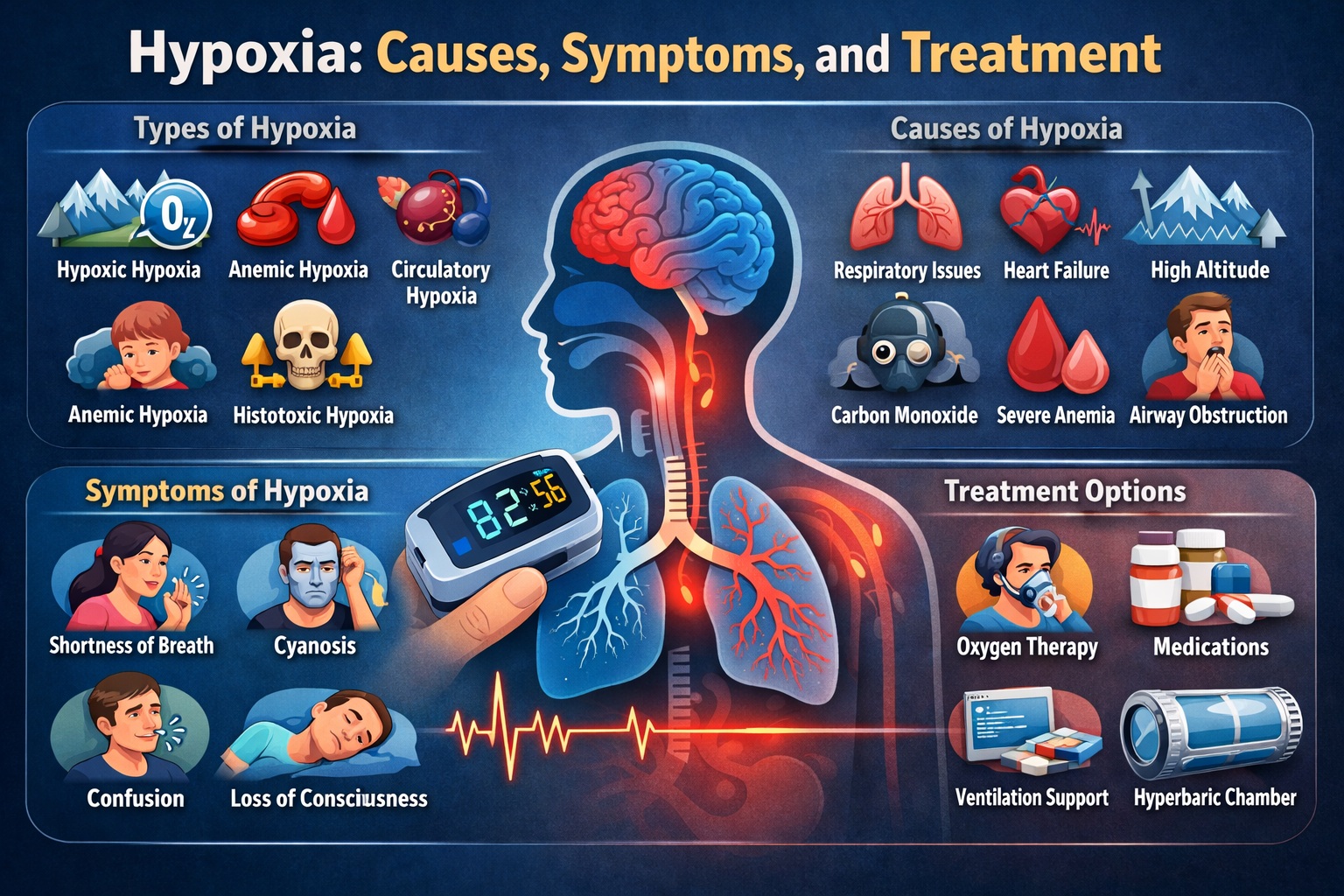
Hypoxia: Causes, Symptoms, Types & Treatment Guide
Introduction to Hypoxia
Hypoxia is a medical condition in which the body or a specific part of the body does not receive enough oxygen to function properly. Oxygen is essential for cellular metabolism and energy production, and even a slight deficiency can lead to serious health complications. While hypoxia can develop suddenly in emergencies, it may also occur gradually due to chronic health conditions.
This condition is particularly critical because oxygen deprivation affects vital organs such as the brain, heart, and lungs. If not treated promptly, hypoxia can result in permanent damage or even death. Understanding its causes, symptoms, and management strategies is essential for early detection and effective treatment.
What Is Hypoxia?
Hypoxia occurs when oxygen levels in the tissues fall below normal. It is important to distinguish hypoxia from hypoxemia. Hypoxemia refers specifically to low oxygen levels in the blood, whereas hypoxia refers to reduced oxygen availability at the tissue level.
The body relies on oxygen for producing adenosine triphosphate (ATP), the energy currency of cells. When oxygen supply is insufficient, cells switch to less efficient anaerobic metabolism, leading to the buildup of lactic acid and eventual tissue damage.
Types of Hypoxia
Hypoxia is classified into several types based on its underlying cause:
1. Hypoxic Hypoxia
This is the most common type and occurs when there is insufficient oxygen in the air or when the lungs cannot adequately oxygenate the blood. It is often seen at high altitudes or in respiratory diseases.
2. Anemic Hypoxia
In this type, the blood’s ability to carry oxygen is reduced. This may result from conditions like anemia or carbon monoxide poisoning, where hemoglobin cannot effectively bind oxygen.
3. Circulatory Hypoxia
Also known as stagnant hypoxia, this occurs when blood flow is inadequate to deliver oxygen to tissues. It is commonly associated with heart failure or shock.
4. Histotoxic Hypoxia
Here, the cells are unable to use oxygen effectively despite adequate supply. This type is often caused by toxins such as cyanide that interfere with cellular respiration.
Causes of Hypoxia
Hypoxia can result from a wide range of medical conditions and environmental factors. Some of the most common causes include:
- Respiratory disorders: Conditions like asthma, chronic obstructive pulmonary disease (COPD), and pneumonia can impair oxygen exchange in the lungs.
- High altitude: Reduced oxygen pressure at high altitudes can lead to hypoxia, especially in individuals who ascend too quickly.
- Heart conditions: Heart failure or congenital heart defects can limit oxygen delivery to tissues.
- Severe anemia: A reduced number of red blood cells limits oxygen transport.
- Airway obstruction: Choking, suffocation, or blockages can prevent oxygen from reaching the lungs.
- Carbon monoxide poisoning: This gas binds strongly to hemoglobin, preventing oxygen transport.
- Drug overdose: Certain medications can depress breathing, leading to reduced oxygen intake.
Symptoms of Hypoxia
The symptoms of hypoxia can vary depending on its severity and duration. Early recognition is crucial for preventing complications.
Mild Symptoms
- Shortness of breath
- Rapid breathing
- Increased heart rate
- Restlessness or anxiety
- Headache
Moderate Symptoms
- Confusion or difficulty concentrating
- Cyanosis (bluish discoloration of lips or skin)
- Fatigue
- Dizziness
Severe Symptoms
- Loss of consciousness
- Severe shortness of breath
- Irregular heartbeat
- Seizures
- Coma
The brain is particularly sensitive to oxygen deprivation, and symptoms such as confusion and loss of consciousness can appear quickly.
Effects of Hypoxia on the Body
Hypoxia affects multiple organ systems, especially when prolonged:
Brain
The brain requires a constant supply of oxygen. Even a few minutes of oxygen deprivation can lead to irreversible brain damage.
Heart
The heart must work harder to compensate for low oxygen levels, which can lead to arrhythmias or heart failure.
Lungs
Chronic hypoxia can worsen lung diseases and lead to complications such as pulmonary hypertension.
Muscles and Tissues
Lack of oxygen reduces energy production, causing fatigue and muscle weakness.
Diagnosis of Hypoxia
Healthcare professionals use several methods to diagnose hypoxia:
- Pulse oximetry: A non-invasive test that measures oxygen saturation in the blood.
- Arterial blood gas (ABG) test: Provides detailed information about oxygen and carbon dioxide levels.
- Imaging tests: Chest X-rays or CT scans help identify underlying lung conditions.
- Pulmonary function tests: Evaluate lung capacity and efficiency.
Early diagnosis is essential to prevent long-term complications and initiate appropriate treatment.
Treatment of Hypoxia
Treatment depends on the underlying cause and severity of the condition.
Oxygen Therapy
The primary treatment involves administering supplemental oxygen through nasal cannulas, masks, or ventilators.
Medications
- Bronchodilators to open airways
- Steroids to reduce inflammation
- Antibiotics for infections
Treating Underlying Conditions
Managing chronic diseases such as asthma, heart disease, or anemia is crucial for long-term control.
Mechanical Ventilation
In severe cases, patients may require assisted breathing through a ventilator.
Hyperbaric Oxygen Therapy
This specialized treatment delivers oxygen at higher-than-normal pressure, helping improve oxygen delivery to tissues.
Prevention of Hypoxia
Preventing hypoxia involves addressing risk factors and maintaining overall health:
- Avoid smoking and exposure to harmful pollutants
- Use proper safety measures in high-risk environments
- Acclimatize gradually when traveling to high altitudes
- Manage chronic health conditions effectively
- Ensure proper ventilation in enclosed spaces
- Install carbon monoxide detectors at home
When to Seek Medical Help
Immediate medical attention is required if you or someone else experiences:
- Severe shortness of breath
- Bluish discoloration of the skin or lips
- Confusion or inability to stay awake
- Chest pain or irregular heartbeat
Prompt treatment can prevent life-threatening complications and improve outcomes.
Conclusion
Hypoxia is a serious condition that can have profound effects on the body if not addressed promptly. From mild symptoms like shortness of breath to severe complications such as organ failure, the impact of low oxygen levels should never be underestimated.
Understanding the different types, causes, and symptoms of hypoxia can help individuals recognize warning signs early and seek timely medical care. With proper diagnosis, treatment, and preventive measures, hypoxia can be effectively managed, reducing the risk of long-term damage and improving quality of life.